

Contributors and Staff
Lindsey Gray | Publisher | lgray@csg.org
Tyler Reinagel, Ph.D. | Editor-in-Chief
Cody Allen | Senior Policy Analyst | callen@csg.org
Tom Opdyke | Senior Policy Analyst
Erin Twomey Partin | Policy Analyst
Susan Siracusa | Graphic Designer | ssiracusa@csg.org
Agriculture and Rural Development
- Feature Spotlight: Pine Trees in Peril: Mounting Challenges to the Timber Industry in the South
- Setting the Standard: Standardized Templates for Solar Leases
- Navigating New Federal Policies Affecting Farmers
- Up in the Air: Drone Regulations for Agriculture
- Help Wanted: Addressing Labor Shortages in Agriculture
- Securing the Future of Food: State Actions to Combat Food Insecurity
- Fighting Tusk and Nail: State Actions to Stop the Spread of Feral Hogs
Economic Development, Transportation, and Cultural Affairs
- Celebrating the Semiquincentennial: America’s 250th Anniversary
- Homegrown Tourism: Managing the Shift from International to Domestic Visitors
- Classrooms to Careers: Career, Technical, and Agricultural Education (CTAE)Programs, Credentialing, and Apprenticeships
- State Incentives for Multi-Family Housing and Zoning Reforms
- Building Big Close to Home: Place-Based Economic Development Strategies
- Beyond the Gas Tax: Transportation Funding Diversification
Education
- Sharing is Caring: How States Can Lead the Way with Education Data Sharing Agreements
- From ABCs and 123s to Birth-to-3: How States are Approaching Early Childhood and Pre-K Education
- When the Well Runs Dry: How States Can Help Support Alternative Local Education Funding Streams
- States Make the Choice: Further Expansions of Public and Private School Choice
Programs - Saved by the Bell: Improving Attendance with Counseling, Intervention, and Support for At-Risk Students
- System Shock: Addressing Enrollment and Funding Challenges in Higher Education
Energy and Environment
- Liquid Legislation: States’ Ongoing Approaches to Water Rights and Usage
- Dealing with Disasters: How States Are Retooling Relief and Resilience
- Power Demands: States Grappling with Increasing Data Center Power Use
- Protecting Power Grids from Attacks and Disasters
- The Continued Growth of Renewables
- Energy and Resource Consortia
Fiscal Affairs and Government Operations
- Feature Spotlight: Our Two Cents: Implications of the Penny Production Stoppage
- Feature Spotlight: (Not) Lighting Up: Regulation and Considerations for Burnless Tobacco
- Any Port in a Storm: States Consider Roles Supporting Benefits Portability for Workers
- How Federal Actions May Lead to State Budget Deficits and Funding Gaps
- Service and Security: Allowing Campaign Funds for Security Costs and Protections
- The “Path to Zero” Debate and Tax Competitiveness Concerns
- Won’t You Be My Neighbor? Foreclosure Protections, Reforms, and Community
Associations - Bracing for the Boom: The Silver Tsunami and Pension Pressures on States
Human Services and Public Safety
- Feature Spotlight: Sowing Personal Struggles: Mental Health and Suicide Among Southern Farmers
- Bridging the Gap: Medicaid Funding Strategies in the Wake of Federal Cuts
- Who Benefits from Pharmacy Benefit Reform? Understanding PBM Regulations
- Second Chances: Innovative Reentry Programming for Justice-Involved Individuals
- Supporting Working Families: Employer Childcare Tax Credit Initiatives
- Impactful Justice: Revisiting Approaches to Sentencing Reform
- Honoring Service: Expanding Mental Health Support for Veterans
State legislatures across the South are gearing up for the 2026 legislative session, developing and drafting bills to address the most pressing challenges facing their constituents. Drawing on its deep regional expertise, the Southern Region of The Council of State Governments (CSG South) has compiled this annual report to assist policymakers in navigating the complex policy landscape ahead. CSG South has identified key trends and emerging issues expected to gain traction during the upcoming legislative term. While the report focuses on Southern states, it also highlights innovative approaches from across the nation that may offer insights for lawmakers throughout the region.
This 2026 preview examines current and emerging trends across CSG South’s six standing policy committees, providing insights on issues relevant to Southern policymakers. The Agriculture and Rural Development preview discusses standardized templates for solar leases on farmland, state responses to federal agricultural policy changes, drone regulations for agricultural use, addressing labor shortages in agriculture, farmland preservation strategies, and feral hog management, while the Economic Development, Transportation, and Cultural Affairs preview examines state initiatives to celebrate America’s 250th anniversary, the uptick in domestic tourism, career and technical education programs, multi-family housing incentives and zoning reforms, place-based economic development strategies, and transportation funding diversification. In Education policy, multistate education data sharing agreements, expanding early childhood education support, alternative local education funding streams, public and private school choice expansions, attendance intervention strategies, and higher education enrollment and funding challenges are trends to watch for the 2026 legislative term, while water rights and usage regulations, disaster relief and resilience strategies, data center power demands, grid security protections, renewable energy growth, and regional energy consortiums are important issues in the Energy and Environment portfolio. The Fiscal Affairs and Government Operations preview discusses portable benefits for workers, potential state budget impacts from federal actions, campaign fund security provisions, the path to eliminating income taxes, foreclosure protections and community association reforms, and pension pressures from the aging workforce, while the Human Services and Public Safety preview examines Medicaid funding strategies following federal cuts, pharmacy benefit manager reforms, reentry programming for justice-involved individuals, employer childcare tax credits, sentencing reform debates, and veteran mental health support.
Additional information about these or other issues emerging in 2026 is available by contacting CSG South. Our policy team is available throughout the year to prepare targeted policy research and information, provide objective expert testimony to legislative committees, conduct studies on other states’ policies in pressing fields, and develop programming to support and inform policymakers from across the South. We encourage you to be in touch with CSG South during the legislative session and throughout the year to leverage our resources and provide additional support to lawmakers and staff.
AGRICULTURE AND RURAL DEVELOPMENT
Setting the Standard: Standardized Templates for Solar Leases
As solar energy companies court farmers across the country with large-scale leasing agreements, with some as high as $2,000 or more per acre,¹ there is a growing discussion about what these leases entail and how they will impact farmers and their land. Most states have codified some type of regulation regarding the permitting authority for utility-scale solar projects,² but there are fewer laws around the country related to what must be included in a land lease agreement for large-scale solar projects, including those on agricultural land.
State leaders and policymakers are facing new challenges and are having to consider multiple aspects of these types of agreements to ensure a standardized process that addresses the needs and concerns of both farmers and farmland owners, as well as solar energy companies seeking long-term land-use leases. These aspects may include:³
• Subordination agreements in order to standardize the process by which farmers or farmland owners make agreements with lenders for the use of the land;
• Early termination language that covers who is responsible for what aspects of a solar project should one of the parties wish to end the project earlier than intended;
• Impacts on property taxes, including considerations on increased land valuation due to the presence of a solar project;
• Liability and insurance issues to determine who is responsible for any issues with solar equipment on the property;
• Decisions regarding decommissioning and land reclamation at the end of the project.
Some Southern states have already taken steps toward this, including recent legislative action in Georgia, Louisiana, and Texas that codifies provisions on decommissioning,⁴ but many others will likely be considering these issues as solar leases become more prevalent on agricultural land.
- “Why Solar Land Leases are the Future of Agriculture,” Morning AgClips, August 13, 2024; Michael Lauher, “Solar and Wind Leases: Hidden Dangers Farmers Should Know,” FarmProgress, July 23, 2025.
- Shawn Enterline and Andrew Valainis, “Laws in Order: An Inventory of State Renewable Energy Siting Policies,” Regulatory Assistance Project, June 2024.
- Peggy Kirk Hall, Evin Bachelor, and Eric Romich, “Farmland Owner’s Guide to Solar Leasing,” National Agricultural Law Center, November 1, 2021.
- GA Code § 46-3-69; LA Rev Stat § 30:1154; TX Util § 302.0004.
Navigating New Federal Policies Affecting Farmers
The adoption of the One Big Beautiful Bill Act and other federal policies, including tariffs, are likely to bring changes to the agriculture industry in 2026. In March 2025, for example, the U.S. Department of Agriculture (USDA) announced cuts to federal programs that allow local food banks to purchase products from local farmers. The cuts to these programs account for nearly $410 million in funds that would have been used to purchase goods from local farmers across the South.⁵
FIGURE 1. Local Farm Purchase Funding Cuts by State
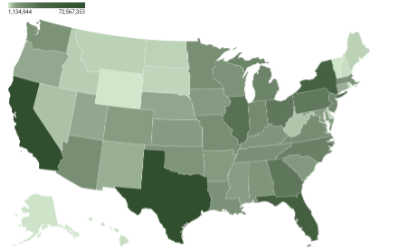
Some Southern states have already begun exploring ways to offset the loss of federal funding. In Florida, lawmakers allocated $38 million to the Farmers Feeding Florida program and will expand it to include purchases of not only produce but also dairy, beef, and other proteins.⁶ In April 2025, the Oklahoma State Legislature allocated $3.2 million for the Oklahoma Local Food for Schools Program (OKLFS), which would account for approximately 10 percent of the state’s loss of federal funding for food programs.⁷ In Arkansas, medical marijuana tax revenue has been used to support state food programs in schools since 2023. The state legislature passed a bill in 2025 that would continue these programs even in the event of federal cuts.⁸ Allocations like those in Florida, Oklahoma, and Arkansas may become more widespread across the South as states continue to determine whether they will offer assistance or introduce new laws to account for these changes and bridge potential gaps in funding and services.
- “Carl Smith, “Schools, Food Banks and Farmers Feel the Sting of Federal Cuts,” Governing, August 1, 2025.
- Gabriella Paul, “Florida Boosts Funding for Farm-to-Food Bank Partnership in Response to Federal Cuts,” WUSF, August 15, 2025.
- Sydnee Batzlaff, “‘Not What We Voted For’: Programs Funneling Farmers’ Food to Schools, Food Banks Cut,” KFOR, March 11, 2025.
- “Sanders Signs Free School Breakfast Bill into Law,” Office of the Governor of Arkansas, February 20, 2025.
Up in the Air: Drone Regulations for Agriculture
Across the South, an increasing number of farmers are utilizing drones for agricultural purposes, including seeding and spraying.⁹ The increase in the use of drones for agriculture has led to a rise in new high-tech jobs in rural areas,¹⁰ as well as drone manufacturers building hubs closer to agricultural regions, such as DMR Technologies in Louisiana.¹¹ Public colleges and universities, such as West Georgia Technical College, have also begun offering training courses designed to teach established agricultural professionals the fundamentals of drone usage and how to obtain a license.¹²
To date, few Southern states have taken legislative steps to address the rise in drone usage in the agricultural sector, and only a handful of states have made special exceptions for remote pilots and aerial applicators using drones. At the federal level, the Federal Aviation Administration (FAA) requires commercial drone pilots to obtain a federal license, and 11 Southern states require operators to obtain an additional state-issued operational permit. Only Alabama, Florida, North Carolina, and Virginia do not have this state-level requirement.¹³ In addition, all Southern states require pesticide/herbicide applicator registration or licensure, though some, like Oklahoma, have reciprocal agreements with other states.¹⁴
With the number of agricultural retailers using drones expected to reach 50 percent by 2027 (up from less than 15 percent in 2021),¹⁵ some Southern states may soon consider easing current regulations on how the technology is used and licensed in order to make agricultural drone use more accessible to growers. These changes would likely fall outside of general drone regulations in a state addressing the agricultural community’s specific needs.
- Miriam McNabb, “Agricultural Drones Take Flight: DJI Report Reveals Rapid Industry Growth Despite Persistent Challenges.” Dronelife, May 1, 2025.
- Mitchell Lierman, “As the Agricultural Drone Industry Takes Off, Federal Regulators Struggle to Keep Up,” Investigate Midwest, January 8, 2025.
- Adam Daigle, “Lafayette Could be a Major Hub for the Drone Industry. Here’s Why,” The Advocate, October 20, 2025.
- “West Georgia Technical College Launches Cutting-Edge Drone Training Program in Partnership with USI,” West Georgia Technical College, September 9, 2025.
- Hannah Hilst, “Drone Laws by State,” FindLaw, April 11, 2025.
- “Oklahoma,” Rotor, accessed October 22, 2025.
- Eric Sfiligoj, “Ag Drones: Building Upon a Decade of Innovation – With More on the Way,” CropLife, September 15, 2025.
Help Wanted: Addressing Labor Shortages in Agriculture
The average age of the American farmer is now 58 years old,¹⁶ and four times as many producers are 65 years or older as those who are younger than 35.¹⁷ In addition, the average farm is experiencing a 20 percent workforce deficit,¹⁸ and an estimated 2.4 million agricultural jobs are unfilled.¹⁹ These factors, coupled with rising labor costs potentially brought on by changing immigration policies and increased demand for labor-intensive crops,²⁰ are compounding the agriculture sector’s labor shortage.
To try and offset labor shortages, public colleges and universities across the South are expanding technology programs to enhance mechanization and technology usage in agriculture, such as the University of Missouri’s Digital Agriculture Research and Extension Center²¹ and Mississippi State University’s Agricultural Autonomy Institute.²² However, the need for labor is still an issue. To incentivize the next generation of farmers, states across the country have considered various approaches, including tax credits, grants, loans, and educational programs.
Some states, including Iowa, Minnesota, Nebraska, and Pennsylvania, have implemented initiatives to offer tax credits to young farmers and current landowners, encouraging the next generation to enter the agricultural sector.²³ In South Carolina, the state’s Department of Agriculture has partnered with Clemson University on the South Carolina Commissioner’s School for Agriculture, a summer program designed to encourage high school students to consider a career in agriculture.²⁴
In Texas, legislation was recently passed to retool its agricultural grant program. Previously, the program had been aimed at young farmers, but now has no age restrictions on applicants for grants. More importantly, the Lone Star State increased the maximum grant amount from $20,000 to $500,000.²⁵ The author of the legislation, Representative Stan Kitzman, stated that he wrote the bill as a direct result of wanting to do more for farmers across the state in the wake of stalled federal action.²⁶
- “Farm Producers,” 2022 Census of Agriculture, U.S. Department of Agriculture, February 2024.
- “The U.S. Farm Labor Shortage,” AgAmerica, March 24, 2025.
- Nicole Heslip, “Farmers Elevate Ag Labor Shortage Crisis Through National Grow It Here Initiative,” Brownfield, October 24, 2025.
- “From Labor Shortage to Labor Solutions: Sabanto’s Autonomous Farming Solutions Address 2025 Agricultural Challenges,” Sabanto, January 22, 2025.
- “U.S. Agriculture & Food Manufacturing: Navigating Labor Challenges and Finding Solutions,” FTI Consulting, June 25, 2025.
- “Digital Agriculture Research and Extension Center,” University of Missouri, accessed October 26, 2025.
- “Agricultural Autonomy Institute,” Mississippi State University, accessed October 26, 2025.
- “Iowa Agricultural Development Division,” Iowa Economic Development & Finance Authority, accessed October 24, 2025; “Beginning Farmer Tax Credit,” Minnesota Department of Agricultural, accessed October 24, 2025; “NExt Gen,” Nebraska.gov, accessed October 24, 2025; “Beginning Farmer Tax Credit Program,” Pennsylvania Department of Community & Economic Development, accessed October 24, 2025.
- “South Carolina Commissioner’s School for Agriculture,” Clemson University, accessed October 24, 2025.
- TX Agric Code § 58.092.
- Jess Huff, “Texas Farmers Could Have Greater Access to Low-Interest Loans Under a Bill the Senate is Considering,” The Texas Tribune, April 29, 2025.
Securing the Future of Food: State Actions to Combat Food Insecurity
There is a saying in the agriculture community: “You can have many problems, but when you have no food, you only have one problem.” To address the issue at its source, states are taking steps to protect farmland and ensure a stable food supply throughout the South.
One key approach that states have taken is through Purchase of Agricultural Conservation Easement (PACE) programs. These state-led initiatives partner with farmland landowners to ensure properties continue to be used for agriculture, as opposed to residential development or other non-agricultural uses. Twenty-seven states currently have active PACE programs, including Florida, Georgia, Kentucky, North Carolina, South Carolina, Texas, Virginia, and West Virginia in the CSG South region.²⁷ However, the American Farmland Trust is quick to point out that few PACE programs have managed to protect at least an acre of farmland for every acre developed.²⁸
Other states have had success with coordinating different initiatives with PACE programs. For example, Maryland operates the Program for the Certification of County Agricultural Land Preservation Programs, which enables counties to retain a portion of the locally generated agricultural land tax if they establish and maintain an effective local land preservation program.²⁹
Several states permit, or even prioritize, the leasing of state land for agricultural purposes. Laws in Connecticut, Hawaii, Massachusetts, and New Jersey authorize the state government to conduct an inventory of state-owned land to identify areas suitable for agriculture.³⁰ Beyond these initiatives, groups like the American Farmland Trust have also suggested farmland mitigation policies as a possible solution to protecting agricultural land. In these programs, an equal amount of comparable land must be protected before a plot of farmland is developed for non-agricultural purposes.³¹
- “Status of State PACE Programs,” Farmland Information Center, 2024.
- Julia Freedgood et al, “Farms Under Threat: the State of the States,” American Farmland Trust, 2020.
- “Certification,” Maryland Department of Agriculture, accessed October 26, 2025.
- Freedgood et al, 2020.
- Ibid.
Fighting Tusk and Nail: State Actions to Stop the Spread of Feral Hogs
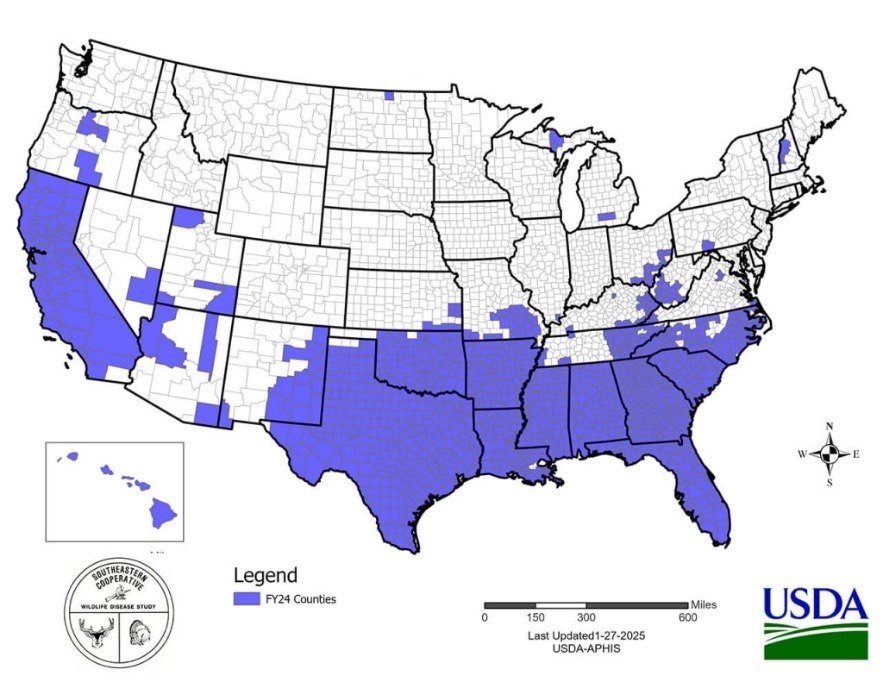
Feral hogs are the most prolific large mammals in North America,³² and Southern states know all too well the destruction they can cause. Across the country, the U.S. Department of Agriculture estimates that feral swine cause $2.5 billion worth of damage each year³³ as they consume crops and reduce the populations of other wildlife.³⁴ They can also pose a risk to humans; feral swine can be linked to certain diseases harmful to humans, such as brucellosis and pseudorabies.³⁵
Furthermore, with adequate nutrition, feral hog populations can double in as little as four months. Although each Southern state has enacted laws regarding the hunting of wild boars (e.g., regulations on hunting on private vs. public land, allowing night hunting, etc.), two have passed laws to outright ban hunting feral hogs. This may seem counterintuitive when trying to stop the threat posed by these animals. Still, academic research suggests that states with more restrictive policies have lower rates of feral swine populations.³⁶
In 2016, the Missouri Conservation Commission enacted a ban on hunting feral hogs on land owned or managed by the state as part of an effort to eradicate them.³⁷ The premise of the ban is that the sound of the gunshot to kill a single feral hog will cause others to scatter, making them more difficult to trap and eradicate through the commission’s baiting traps. Since then, feral hog populations in watershed areas in Missouri have fallen by 84 percent.³⁸
In 2024, the Kentucky Department of Fish & Wildlife Resources followed suit. The agency placed a ban on hunting feral hogs, although it still allows the shooting of wild boars if they are damaging private land. The agency argued that hunting practices make the pigs harder to trap in the long run.³⁹
However, such bans may not fit all states’ needs. Oklahoma has considered a ban on hog hunting, but with an estimated 750,000 hogs, wildlife managers in the state decided that the practice remains beneficial in keeping the population in check.⁴⁰
In addition, a new type of bait, designed and patented by researchers at Louisiana State University, may soon be available if approved by the Environmental Protection Agency (EPA). However, the approval process can take up to ten years, and the bait was only patented in May 2024. If it does go to market, states could consider using it on public lands and subsidizing the cost for farmers on private lands.⁴¹
FIGURE 2. Feral Swine Populations by County, 2024
- Michael D. Kaller and Don Reed, “Invasive Feral Swine in Louisiana,” Louisiana Agriculture, Vol 53, Iss 4, Fall 2010.
- Manage the Damage—Stop Feral Swine, U.S. Department of Agriculture, June 30, 2025.
- Jeff Zeringue, “Hog Eradication Not Pretty, But Essential,” Louisiana Forestry Association, April 16, 2024.
- Randy Zellers, “Aerial Feral Hog Eradication Efforts to Temporarily Close Access to McIlroy Madison County WMA,” Arkansas Game and Fish Commission, January 26, 2024.
- Andrew Smith et al, “Cultural and Regulatory Factors Influence Distribution and Trajectory of Invasive Species in the United States: a Wild Pig Case Study,” Journal of Environmental Management, Vol 338, July 15, 2023.
- “Missouri Bans Feral Hog Hunting On Conservation Land” Associated Press, June 27, 2016.
- Linda Geist, “Private, Public Cooperators Reduce Missouri Feral Hog Number,” University of Missouri, May 23, 2025.
- Liam Niemeyer, “Please, Don’t Shoot the Wild Pigs. It Only Makes Them More Elusive,” Kentucky Lantern, May 16, 2024.
- Eli Fournier, “Kentucky Finalizes Hog Hunting Ban,” MeatEater, June 3, 2024.
- Aidan Mccahill, “Night Vision, Drones and Chemical Warfare: How Louisiana is Expanding Its Invasive Hog Arsenal,” The Advocate, October 6, 2025.
FEATURE SPOTLIGHT
Pine Trees in Peril: Mounting Challenges to the Timber Industry in the South
The timber industry has long been a cornerstone in the economies of Southern states, but reduced demand in the marketplace, shrinking talent pipelines, natural disasters, and regulatory changes have resulted in rapidly evolving challenges. Alabama,⁴² Arkansas,⁴³,⁴⁴ Georgia,⁴⁵ and South Carolina⁴⁶ are among the Southern states that have seen timber mills scaled back and shuttered in recent years.
The forestry and timber industries are critical to the South. Based on 2023 data assembled by the American Forest and Paper Association, Table 1 shows that the 15 states in the CSG South region account for nearly 46 percent of the United States forest product production and nearly half of American jobs in the industry. Beyond the region’s national significance for the industry, the industry is responsible for nearly 450,000 jobs in communities across the South.
TABLE 1. Forest Product Industry Economic Impact (2023)
| State | Manufacturing Output (in Thousands of Dollars) | Employment | Total Compensation (in Thousands of Dollars) |
|---|---|---|---|
| Alabama | $18,927,447 | 36,938 | $3,365,449 |
| Arkansas | $12,000,403 | 23,030 | $1,733,871 |
| Florida | $13,387,166 | 29,489 | $2,520,372 |
| Georgia | $27,430,599 | 51,255 | $4,426,767 |
| Kentucky | $10,268,082 | 22,713 | $1,836,669 |
| Louisiana | $10,426,580 | 18,634 | $1,591,093 |
| Mississippi | $8,000,568 | 18,872 | $1,446,211 |
| Missouri | $7,188,630 | 17,075 | $1,314,508 |
| North Carolina | $19,036,221 | 42,038 | $3,306,922 |
| Oklahoma | $4,249,820 | 7,252 | $507,326 |
| South Carolina | $13,914,652 | 62,114 | $2,318,496 |
| Tennessee | $15,639,479 | 30,405 | $2,553,848 |
| Texas | $24,826,524 | 54,133 | $4,374,466 |
| Virginia | $11,886,516 | 26,632 | $2,026,872 |
| West Virginia | $2,437,045 | 6,450 | $387,758 |
| CSG South States | $199,619,732 | 447,030 | $33,710,628 |
| United States | $435,265,592 | 934,704 | $78,920,455 |
| CSG South, % of US Total | 45.9% | 47.8% | 42.7% |
The direct loss of jobs in these closed mills has been significant. The 2023 closure of the WestRock near Charleston, SC, cost the region approximately 500 jobs.⁴⁶ The 2025 closure of two International Paper facilities in coastal Georgia eliminated more than 1,100 jobs.⁴⁷ The southeast Arkansas community of Crossett lost more than 650 jobs when bleached board operations at the Georgia-Pacific mill ended in 2019.⁴⁸
In March 2025, President Donald Trump issued the Executive Order “Immediate Expansion of American Timber Production.”⁴⁹ The goal of this E.O. was to address many of the challenges timber farmers — including those in Southern states — have faced in recent years. Among the President’s actions are directives to the Secretaries of the Interior and Agriculture to update guidance on timber contracting and submit legislative proposals to stabilize the timber market, expedition of federal approval of forestry projects under the purview of the US Fish and Wildlife Service, establishment of federal targets for timber production of Bureau of Land Management and US Forest Service properties, and long-term permitting exclusions for timber thinning and timber salvage.
The US Department of Agriculture responded the following month with directives to “increase timber outputs, simplify permitting, remove National Environmental Policy Act processes, reduce implementation and contracting burdens, and to work directly with states, local government, and forest product producers” to address the challenges faced by timber farmers and producers.⁵⁰ State leaders are in positions to develop and implement new programs and efforts to ensure the future of timber harvesting, while simultaneously adapting to the changing market for timber demand.
Partnering with colleges and universities to equip and prepare younger generations for the industry has become common throughout the South. In South Carolina, Clemson University’s Wood Utilization and Design Institute is working with industry partners to identify new markets for timber.⁵¹ Mississippi State University has partnered with the Mississippi Lumber Manufacturers Association to endow a professorship focused on innovation in timber manufacturing, strength, and durability.⁵² The University of West Alabama launched a new associate degree in Fall 2025, providing students a two-year program in forestry technology that teaches students critical tools in geospatial technology and harvesting, and allows them to earn widely-recognized professional certifications as Burn Managers, Pesticide Applicators, and Certified Forestry Technicians.
Southern state legislatures have also taken action to protect timber farmers and provide stability needed to ensure the future health and vibrancy of the industry — generally through tax benefits and financial incentives. Georgia House Bill 997 (2022) passed with bipartisan support and provided a statewide exemption from property taxes for timber equipment and timber products. Mississippi provides a “Reforestation Tax Credit,” providing state tax relief for landowners investing in reforestation and long-term stability of the timber industry.⁵³
Collaborative governance between states and the federal government is critical to ensuring the long-term and maintained vibrancy of the South’s forestry and timber industries. Speakers of the House in Alabama, Arkansas, Florida, Georgia, and South Carolina recently signed a joint letter to Chair of the House Natural Resources Committee and other leaders in the United States House of Representatives stressing the vitality of the forestry industry for the region and encouraging federal action on trade requirements, market stability, and access to international markets.
- Huck Treadwell, ”Pulpwood market faces uncertain future.” The Troy Messenger, July 21, 2025.
- Andrew Mobley, ”Arkansas timber industry in criss as market demand plummets.” KATV ABC7, October 23, 2025.
- Neal Earley, ”Arkansas’ forestry industry under strain from trad disputes, decreased demand.” Arkansas Democrat Gazette, October 28, 2025.
- Orlando Montoya, ”Georgia forestry considers future after Helene, mill closures and market decline.” Georgia Public Broadcasting, October 3, 2025.
- Caitlin Richards, ”SC timber industry faces uncertainty amid mill closures.” ABC15 News, August 27, 2025.
- Dave Williams, ”Georgia lawmakers coming to grips with mill closings.” Georgia Public Broadcasting, September 11, 2025.
- Ibid.
- Immediate expansion of American timber production [Executive Order]. The White House, March 1, 2025
- ”Secretary Rollins Announces Sweeping Reforms to Protect National Forests and Boost Domestic Timber Production.” United States Department of Agriculture, April 4, 2025.
- Jonathan Veit, ”Clemson instiutute works with industry on new markets for South Carolina timber.” Clemson News, September 30, 2025.
- Vanessa Beeson, ”Mississippi Lumber Manufacturers Association partners with MSU to advance mass timber through endowed professorship.” Mississippi State University, October 23, 2024.
- ”P2307: Timber Tax Overview.” Mississippi State University Extension, 2024.
ECONOMIC DEVELOPMENT, TRANSPORTATION, AND CULTURAL AFFAIRS
Celebrating the Semiquincentennial: America’s 250th Anniversary
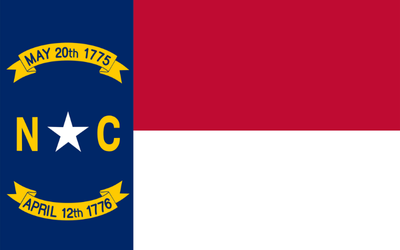
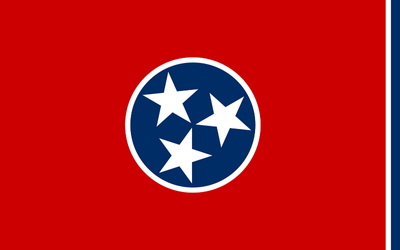
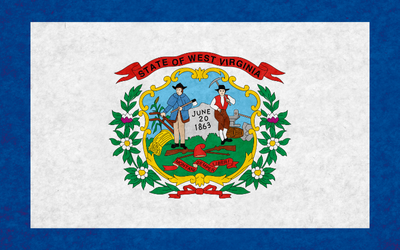
The approaching 250th anniversary of the United States in 2026 represents a once-in-a-generation opportunity for states to celebrate the nation’s founding while stimulating economic activity and civic engagement. State and local governments, historical associations, and cultural groups across the South are already coordinating efforts to mark the nation’s 250th birthday through public events, heritage tourism, and educational initiatives.⁵⁴ Many states — including all 15 CSG South states — have established official “America 250” commissions or task forces charged with developing plans that connect America’s history, state and community pride, and a celebration of the unique assets each of our states bring to the fabric of America.
Beyond events and programming, America’s 250th birthday and state-led celebrations offer a catalyst for regional tourism and economic development. Government and community leaders are investing in site improvements to historical landmarks, revitalizing downtown districts, and developing new experiences that celebrate sites and events that define their states.⁵⁵ Public–private partnerships help communities fund cultural programming, marketing campaigns, and transportation enhancements to accommodate increased visitation.
Importantly, states view America 250 milestones as an opportunity to promote civic learning and social cohesion. Initiatives that highlight inclusive narratives — recognizing the contributions of diverse communities throughout American history — aim to strengthen engagement and bridge divides. Whether through statewide festivals, educational resources, or heritage trails, this national celebration has the potential to unify communities and generate sustained benefits in tourism, small business growth, and community identity well beyond 2026.
America 250 State Commissions in the South




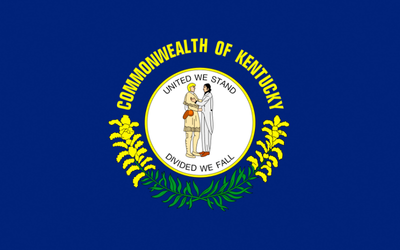
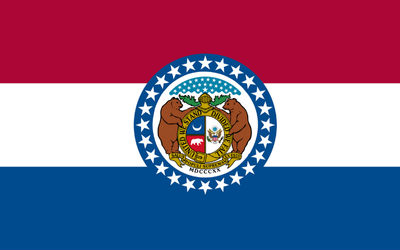

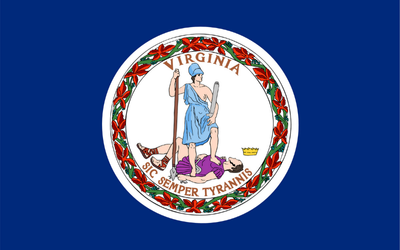
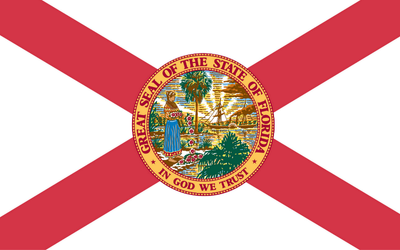

- “State and Territory Commissions.” US Semiqincentennial Commission
- “American 250: Annual Report to Congress.” US Semiquincentennial Commission. January 31, 2025.
Homegrown Tourism: Managing the Shift from International to Domestic Visitors
As global travel continues to recover from the pandemic, states are observing a lasting shift in tourism patterns: fewer international visitors and a sharp rise in domestic travel.⁵⁶ Studies forecast an overall decline of 8.2 percent in international arrivals to the United States, but growth from several countries in South America and the Far East.⁵⁷ The economic impact on American destinations is significant, with estimates of more than $12 billion in lost visitor spending in 2024.⁵⁸ This trend is reshaping state tourism strategies and prompting investments that focus on local and regional visitors.⁵⁹ Many states are emphasizing “staycations,” outdoor recreation, agritourism, and culturally rooted experiences to attract nearby travelers seeking accessible, meaningful destinations.⁶⁰
FIGURE 3. Overseas visitor arrivals to the US by top 20 markets

In response, state tourism agencies are modernizing marketing campaigns, strengthening digital engagement, and diversifying advertising to highlight unique, lesser-known attractions. Investments in visitor assets — upgrades to state parks, development of smaller-scale attractions, and support for community events — help make local tourism more sustainable and appealing. Partnerships with chambers of commerce, convention and visitors bureaus, and small business associations are also expanding tourism reach to nearby residents.⁶¹
States are using this moment to promote economic resilience by reducing dependence on international arrivals and focusing instead on strengthening in-state travel networks. Additionally, many are encouraging visitors to explore close-to-home sites and support local small businesses. The domestic travel surge offers a valuable opportunity for states to redefine tourism as a driver of community and state vitality.
- Andrew Moore, “As International Travel to the US Declines, Expert Breaks Down Impacts.” NC State University College of Natural Resources News, May 30, 2025
- “US Inbound Travel’s Continued Decline Amid Sentiment Challenges.” Tourism Economics, July 22, 2025.
- “US Economy Set To Lose $12.5BN In International Traveler Spend this year.” World Travel and Tourism Council, May 14, 2025.
- Susan Carpenter, “Domestic travel props up U.S. tourism as Canadians steer clear, travel group finds.” Spectrum Local News, October 3, 2025
- Craig Shoup, “Locals can be tourists, too: Check out these staycation ideas in Nashville for fall break.” The Tennessean, October 1, 2025.
- Pamela Sharma, “How Businesses Will Show Up for America’s 250th Birthday.” US Chamber of Commerce Foundation, October 27, 2025
Classrooms to Careers: Career, Technical, and Agricultural Education (CTE/CTAE) Programs, Credentialing, and Apprenticeships
States across the nation are expanding Career, Technical, and Agricultural Education (CTE/CTAE) programs to address growing workforce needs and prepare students for high-demand industries amid increasing pressures on talent pipelines across the South. Among the success stories of CTAE programs in the region are a construction program developed between the South Georgia Home Builders Association and Valdosta High School in south Georgia,⁶² state-funded grants to 16 CTAE programs in Virginia to fund critical training materials such as high-fidelity patient simulator manikins and virtual reality multi-process welders,⁶³ and the passage of Texas House Bill 20, which allows students to earn professional certifications in their high school programs to help address the state’s anticipated growth of 150,000 jobs in scientific and technical fields by 2028.⁶⁴
TABLE 2. CSG South State CTE/CTAE Graduation and Employment Outcomes (2023)
| State | Secondary School CTE/CTAE Enrollment | Secondary School Graduation Rate | Six-month Postsecondary Employment Rate |
|---|---|---|---|
| Alabama | 59,592 | 97.7% | 68.7% |
| Arkansas | 119,878 | 97.2% | 87.1% |
| Florida | 359,636 | 96.0% | 81.7% |
| Georgia | 548,871 | 97.3% | 99.3% |
| Kentucky | 145,159 | 97.9% | 85.6% |
| Louisiana | 130,310 | 95.0% | 81.0% |
| Mississippi | 29,994 | 99.1% | 92.7% |
| Missouri | 152,722 | 98.1% | 81.1% |
| North Carolina | 548,010 | 98.0% | 87.1% |
| Oklahoma | 131,792 | 88.9% | 94.8% |
| South Carolina | 236,321 | 98.4% | 88.8% |
| Tennessee | 102,270 | 97.8% | 78.3% |
| Texas | 1,189,533 | 97.4% | 81.9% |
| Virginia | 194,144 | 99.8% | 79.5% |
| West Virginia | 55,038 | 97.2% | 82.7% |
Policymakers and education leaders recognize that traditional four-year pathways alone cannot meet the economic and labor market demands of the modern economy. As a result, states are investing in career pathways that blend academic learning with hands-on training, industry certifications, and apprenticeships designed in partnership with employers. States are making significant financial investments and funding mechanisms to ensure the viability of these programs. Across the South, Florida’s 2025–2026 budget included $60 million for the creation and expansion of CTE and apprenticeship programs,⁶⁵ and the “Tennessee Investment in Student Achievement” funding formula provides $5,000 per student allocations to school districts for particular high-demand CTE programs.⁶⁶
Many states are increasing funding for equipment upgrades, dual-enrollment programs, and teacher training to align CTAE offerings with local industry sectors such as advanced manufacturing, healthcare, information technology, and energy. Through collaborations with businesses and community colleges, students can earn stackable credentials and work-based experience that translate directly into employment opportunities.
These programs also serve a broader equity purpose — helping rural and underrepresented students access career opportunities without incurring significant debt. States are refining credentialing frameworks to ensure consistency, quality, and recognition across regions. By aligning education with real-world needs, CTE/CTAE programs are strengthening workforce pipelines, supporting small business development, and reinforcing state competitiveness. The renewed emphasis on technical education signals a shift toward valuing diverse career paths and expanding economic mobility for future generations.
Investments in these programs by state governments, industry partners, and professional associations are yielding results and student success. According to data from Advance CTE, the national association of state-level CTE directors and professionals (Table 2), more than four million students were enrolled in CTE/CTAE programs throughout the region, with secondary school graduation rates consistently above 90 percent, and demonstrated employment outcomes for students graduating from postsecondary programs with professional certifications and associate degrees.
- ”South GA Home Builders Association supports VHS CTAE Construction Program.” Valdosta Today, January 2025.
- ”Grants funding new equipment for CTE programs.” CBS 19 News, May 8, 2025.
- Lauren Rangel, ”Texas schools expand career and technical education programs to meet workforce needs.” Spectrum Local News, October 6, 2025.
- ”Governor Ron Desantis Signs Florida Fiscal Year 2025-2026 Budget.” June 30, 2025.
- Cassie Stinson, ”CTE BEP vs. TISA Funding Comparison.” Tennessee Comptroller of the Treasury, July 2023.
State Incentives for Multi-Family Housing and Zoning Reforms
Housing affordability and supply shortages remain among the most pressing issues for state and local policymakers.⁶⁷ To address these challenges, states are adopting a variety of policy tools. Among these are direct financial incentives like the Texas Foundations Fund⁶⁸ and the Georgia Dream Homeownership Program,⁶⁹ which offer down payment and closing cost assistance, comprehensive zoning reform, and Florida’s 2025 “Live Local Act” (Senate Bill 1730), which allows private developers to build mixed-use property on commercially zoned land with reduced local restrictions to encourage construction of new housing, particularly multifamily developments. These efforts aim to balance economic growth with accessibility, ensuring that workers, families, and seniors can find affordable homes near jobs and services.
States are using tax credits, low-interest loans, and grant programs to support developers who build affordable and workforce housing. Some legislatures are reducing regulatory barriers by introducing “by-right” zoning with established standards for multifamily projects in Texas,⁷⁰ reforming parking minimums in North Carolina,⁷¹ and streamlining permitting processes in Florida and Tennessee.⁷² Others are incentivizing adaptive reuse of vacant commercial spaces into residential units or supporting mixed-use developments that enhance community livability. Texas was at the forefront of this effort in the region with Senate Bill 2477, easing the conversion of vacant office buildings into multi-unit residential buildings in 2025.
Beyond affordability, states recognize housing as a foundational element of workforce development and regional competitiveness. Employers cite housing costs and availability as key factors in recruiting and retaining employees. As a result, housing policy has increasingly become a tool of economic strategy. By promoting a wide array of attainable housing options through state-led reforms, governments are working with local authorities to ensure that economic opportunity remains broadly shared and achievable across urban, suburban, and rural communities alike.
- Mary Louise Kelly, Mia Venkat, Kathryn Fink, and William Troop, ”Housing experts say there just aren’t enough homes in the U.S.” National Public Radio, April 23, 2024.
- 2025 Texas Foundations Fund Application, January 30, 2025.
- Georgia Dream Loan Program
- Richard Lawson, ”Texas Treads a New Path Into Zoning to Battle Housing Crisis.” The Builder’s Daily, April 16, 2025.
- James Scott, ”North Carolina lawmakers introduce bill targeting parking lots.” WCCB Charlotte, March 13, 2025.
- Kery Murakami, ”States Embrace Diverse Strategies to Ease Housing Supply Constraints.” The Pew Charitable Trusts, January 17, 2025.
Building Big Close to Home: Place-Based Economic Development Strategies
Economic development strategies are evolving from a focus on large, high-profile “mega projects” to more localized, place-based approaches that emphasize community assets, scalability, and sustainability.⁷³ States are increasingly supporting smaller, targeted projects that align with local strengths — such as workforce skills, existing infrastructure, and cultural identity — rather than competing solely for large corporate investments. Particularly important for the South, much of the current focus is on capacity-building and tapping into the assets of rural communities.⁷⁴
This shift has encouraged the creation of state programs that promote site readiness,⁷⁵ infrastructure improvement,⁷⁶ and expedited permitting for small and mid-sized developments.⁷⁷ Policymakers recognize that empowering communities to pursue projects tailored to their needs can generate more inclusive, long-term economic growth. States are also enhancing collaboration between economic development agencies, local governments, and private partners to attract investment in rural and economically distressed regions.⁷⁸
Place-based development fosters entrepreneurship, revitalizes main streets, and improves quality of life by leveraging unique local assets.⁷⁹ It also enables states to diversify their economies, reducing vulnerability to the risks associated with single, large-scale employers.⁸⁰ By balancing strategic incentives with community engagement and planning, states are fostering resilient economies built on shared prosperity, innovation, and adaptability.
- Jesse Potts, ”How can place-based policies help rebuild the American economy?” Harvard Kennedy School of Government, April 30, 2025.
- Anthony F. Pipa and Adam Aley, ”EDA’s Economic Recovery Corps is brining much needed capacity to rural places seeking to attract investment.” Brookings Institution, August 6, 2025.
- ”Duke Energy helps Florida communities prepare business and industrial sites to bring local investments.” Duke Energy News Center, August 19, 2025.
- ”Mississippi’s $110 Million Investment Lays Foundation for Future Economic Development Success.” Office of Governor Tate Reeves, November 13, 2024.
- ”Governor Signs ’Food Truck Freedom Act’ into Law.” State of Oklahoma House of Representatives, May 6, 2025.
- David L. Johnson, Mark Muro, Mayu Takeuchi, and Robert Maxim, ”Sustaining America’s new industrial policy.” Brookings Institution, December 12, 2024.
- Xavier de Souza Briggs and Tracy Hadden Loh, ”Economic development in its place: Why land use tools need an upgrade as communities face a perfect storm.” Brookings Institution, October 31, 2025.
- ”Comprehensive Economic Development Strategy,” United States Economic Development Administration. March 26, 2025.
Beyond the Gas Tax: Transportation Funding Diversification
As traditional transportation funding mechanisms — particularly the gas tax — decline in effectiveness, states are exploring diversified revenue strategies to sustain infrastructure investments. Electric vehicle adoption,⁸¹ improved fuel efficiency, and inflationary pressures have created long-term challenges for maintaining stable funding streams. In response, many states are experimenting with or implementing modernized approaches such as increases in annual registration fees for electric vehicles in North Carolina⁸² and Tennessee,⁸³ and public-private partnerships like the expansion of toll lane infrastructure in metro Atlanta.⁸⁴
Other Southern states have reviewed and updated traditional transportation financing mechanisms through legislation. Alabama’s “Rebuild Alabama Act of 2019” earmarked a portion of the state’s gas tax revenue for local transportation infrastructure through a competitive grant application process for municipal and county governments, including a local matching requirement.⁸⁵ In the 2025 award cycle, RAA grants provided $15.2 million in transportation funding to 51 local projects across the state.⁸⁶
Kentucky passed House Bill 299 (2015), establishing a variable gas tax formula to reduce fiscal vulnerabilities. The legislation increased the “minimum average wholesale price” of gas to mitigate dramatic swings in gas tax revenue and set a floor ensuring revenue would not fall below 19.6 cents per gallon, regardless of retail gasoline costs.
In Texas, Proposition 7,⁸⁷ approved by voters in 2015, reapportioned existing revenue streams to provide additional dedicated funding for transportation. After the state sales and use tax generates its first $28 billion in revenue, the next $2.5 billion is transferred to the state highway fund, with funds above $30.5 billion returned to the general fund. The proposition also sets a “trigger point” of $5 billion from motor vehicle sales and rental taxes, after which 35 percent of additional collections are transferred to the state highway fund.⁸⁸ The Texas Department of Transportation estimates that the combined additional revenue from these two elements of Proposition 7 in FY2026 will be $3.371 billion.⁸⁹
Public-private partnerships are gaining traction as a means of leveraging private capital for large-scale transportation projects, enabling states to advance construction while reducing public-sector risk.⁹⁰ Infrastructure banks and revolving loan funds provide flexible financing options that prioritize projects with significant regional and economic impact.⁹¹ States are also introducing and expanding express and toll lane systems,⁹² and exploring technology-based collection methods that improve equity and efficiency.⁹³
Transportation funding reform is increasingly intersecting with broader policy goals, including sustainability, resilience, and workforce access. States are integrating increased fuel efficiency and electrification into long-term transportation finance planning and working to build a more adaptive and financially secure infrastructure system that supports economic growth and connectivity.
- “Trends in electric car markets,” International Energy Agency. September 2025.
- Celeste Gracia, ”Registration fees increasing for electric, plug-in hybrid vehicles starting Jan. 1.” WUNC North Carolina Public Radio, December 29, 2023.
- Karen Jenkins, ”Local drivers surprised by TN’s new fee on hybrid, electric cars.” WJHL News Channel 11, April 2, 2024.
- Tim Darnell, ” Trump administration grants more than $3B loan for Ga. 400 toll lane project.” Atlanta News First, August 5, 2025.
- ”Rebuild Alabama Act Annual Grant Program.” Alabama Department of Transportation, 2025.
- ”2025 Rebuild Alabama Annual Grant Awarded Projects, Rounds 1-3.” Alabama Department of Transportation, September 2025.
- ”Proposition 7 Funding.” Texas Department of Transportation.
- Ginger Lowry and TJ Costello, ”A Review of the Texas Economy: Texas Road Finance (Part I).” Texas Comptroller, May 2016.
- ”Transportation Funding in Texas, January 2025 Edition.” Texas Department of Transportation, January 2025.
- Robert Rybnicek, Julia Plakolm, and Lisa Baumgartner, ”Risks in Public-Private Partnerships: A Systematic Literature Review of Risk Factors, Their Impact and Risk Mitigation Strategies.” Public Performance and Management Review, April 10, 2020.
- Robert Puentes and Jennifer Thompson, ”Banking on Infrastructure: Enhancing State Revolving Funds for Transportation.” Brookings-Rockefeller Project on State and Metropolitan Innovation, September 2012.
- Audrey Washington, ”Toll lanes could be added to I-285. Here’s how to have your say on them.” WSB-TV Atlanta, October 8, 2025.
- Kevin Kelly, et. al., ”The evolving tolling landscape: Improving toll revenue collection in electronic tolling.” Deloitte, 2022.
EDUCATION
Sharing is Caring: How States Can Lead the Way with Education Data Sharing Agreements
Recent uncertainty surrounding the U.S. Department of Education and its research arms, the Institute for Education Sciences and the National Center for Education Statistics, has highlighted the overreliance on federal data sharing by state educational systems. However, due to the prevalence of individuals moving across state lines, single-state systems, despite significant investment, cannot track individual outcomes or may face skewed data without an interstate source of comparison.
By examining state-led proposals, such as the Multistate Longitudinal Data Exchange (MLDE) — a pilot program led by six states facilitated by the Western Interstate Compact for Higher Education (WICHE) — states in the South can create long-lasting educational data systems that better serve state needs than a larger federal-led system. Designed to supplement, not replace, existing state longitudinal data systems, the model below illustrates how member states may utilize this pilot program.
FIGURE 4. Example of How States Access and Share Data Across the Multistate Longitudinal Data Exchange Pilot Program
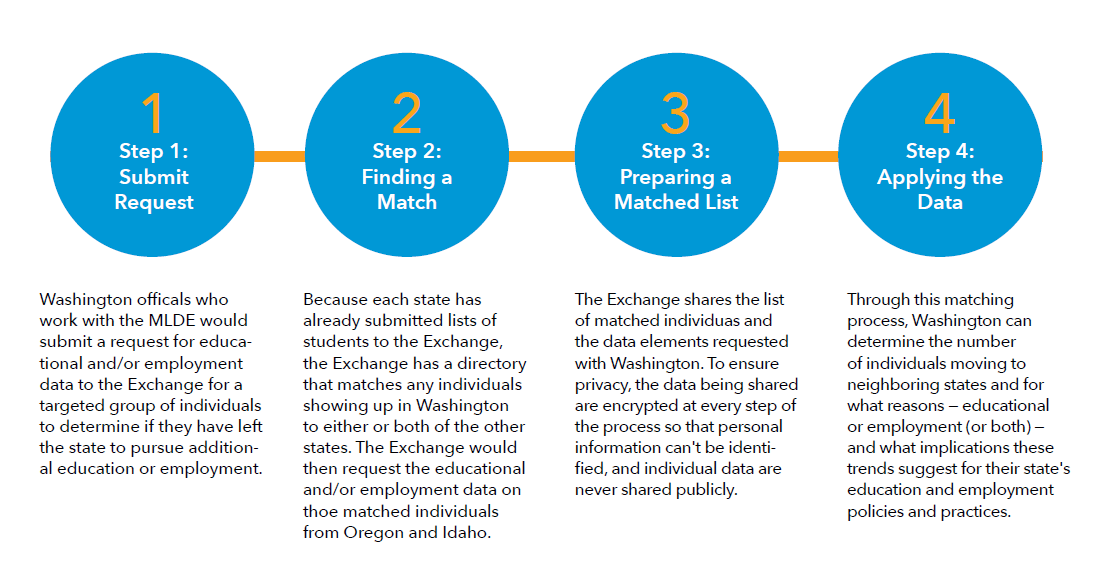
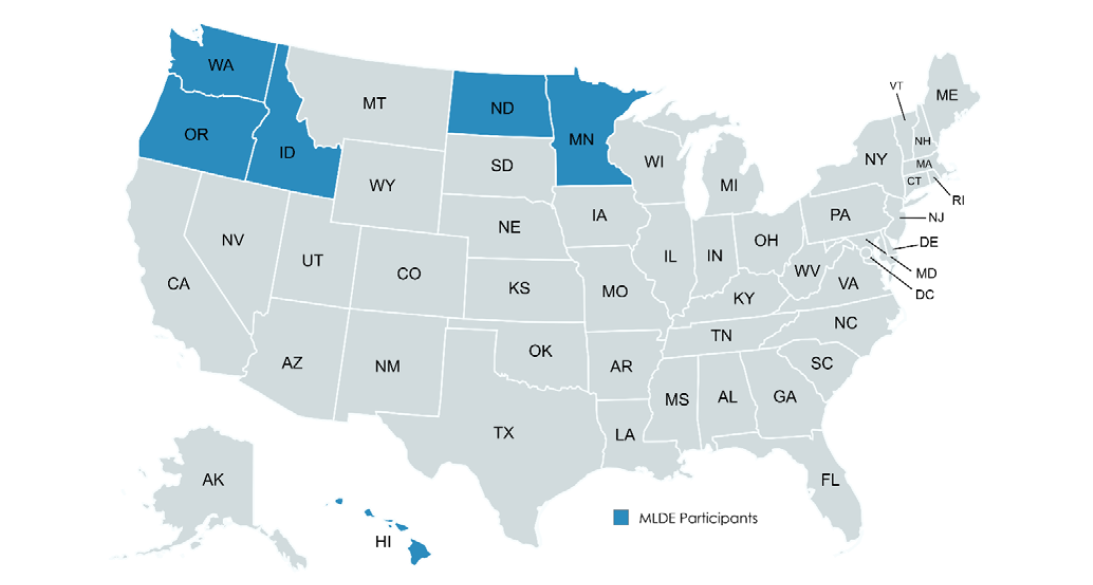
The MLDE facilitates sharing K-12 education, postsecondary education, and workforce or labor data across state lines. Begun as a pilot exchange in 2010, with four member states — Hawaii, Idaho, Oregon, and Washington — the program expanded to include Minnesota and North Dakota by 2020 through signed Memoranda of Agreement outlining the background, purpose, scope, justification, and authority.
As a state-led and governed project, states could come together to agree on the types of data that would be exchanged, the processes for storage and transmission, and security and privacy policies. The agreements also stipulated that a federated data model — with data remaining with providers wherever possible, rather than being centralized in a “warehouse” containing all data from all participants — would be used for data collection and utilization, providing greater flexibility for members.⁹⁴
With aligned missions and comparable student populations, this state-led model may also hold promise for Southern states.
FIGURE 5. Current Multistate Longitudinal Data Exchange Pilot Program Member States
- Heather McKay, Sara Haviland, and Suzanne Michael, “MLDE Issue Brief: Building a Multistate Governance System,” Rutgers’ Education and Employment Research Center, October 2020.
From ABCs and 123s to Birth-to-3: How States are Approaching Early Childhood and Pre-K Education
States have begun to invest more heavily in early childhood education to reflect a growing consensus that birth–to–three outcomes disproportionately impact student academic and social outcomes. States in the South, such as Alabama, Georgia, Mississippi, and Oklahoma, have led the way in kindergarten and pre-kindergarten investment and support, and are well-positioned to continue expanding support to early opportunities beyond school-aged children.⁹⁵
As seen in the table below, this can include efforts to ensure early education providers receive access to facilities funds, as seen in Hawaii; developing public-private partnerships to serve as hubs for families, employers, and state resources supporting early education opportunities in Michigan; or increasing the state role in supplementing the wages of early childhood educators, as seen with Maine’s $30 million annual investment in monthly wage stipends of up to $540 for early educators.
Additionally, states can look to New Mexico’s recent announcement of providing universal childcare to families as a means of educational preparation for early learners and family support for parents in the workforce, following the passage of a voter-approved ballot measure in 2022. This first-in-the-nation project is estimated to save around $12,000 per family. It will be supported by an initial $300 million investment and recurring transfers from the state’s permanent oil and gas trust fund. Lawmakers will also implement a $12.7 million low-interest loan fund to support the construction, improvement, and maintenance of childcare facilities, with an additional $20 million appropriations request for the Fiscal Year 2027 budget.⁹⁶
TABLE 3. Select Recently Enacted Early Childhood Education and Support Legislation
| State | Measure (Year) | Summary |
|---|---|---|
| Arkansas | House Bill 1733 (2025) | Changed eligibility for the state’s Better Chance for School Success Program, which provides high-quality preschool support for at-risk children, from only three and four-year-olds to now include children from birth to age five. |
| Florida | House Bill 1361 (2024) | Established the New Worlds Scholarship Accounts to support children in Pre-K 3 through Grade Five who exhibit early literacy and/or mathematics deficiencies with $1,200 per year to be spent on enrichment or educational materials or activities. |
| Hawaii | House Bill 329 (2025) | Expanded the responsibility of the School Facilities Authority to include facilities for prekindergarten, preschool, Childcare, and other early learning campuses, as well as teacher or staff workforce housing for pre-k educators and staff. |
| Maine | House Paper 1482 (2021) | Provided wage supplements ranging between $240 – $540 per month to early childhood educators and Childcare providers, tiered based upon educational credentials and experience. |
| Nevada | Assembly Bill 212 (2025) | Permanently establishes a Virtual Early Childhood Family Engagement Program that provides parents with training and coaching to empower them to access educational supports and opportunities for their young children while increasing school readiness. |
| New Mexico | House Joint Resolution 1 (2021) | Subsequently approved by voters in 2022, it allocated a portion of the state’s Land Grant Permanent Fund — the state’s oil and gas reserves tax fund — to implement a comprehensive early childhood education system. |
| Vermont | House Bill 217 (2023) | Established a universal early education program providing free pre-k to four-year-olds in the state and increased access to educational Childcare for younger children below poverty guidelines, requiring a family co-pay of $50 per week on a sliding scale based upon income. |
- Allison Friedman-Krauss, et al., “The State of Preschool 20254: State Preschool Yearbook,“ National Institute for Early Education Research, September 2025.
- “New Mexico is first state in nation to offer universal Childcare,” Press Release from the Office of Governor Michelle Lujan Grisham, September 8, 2025.
When the Well Runs Dry: How States Can Help Support Alternative Local Education Funding Streams
With federal and state purse strings tightening, lawmakers continue examining alternative ways to fund education. These can be as simple as providing local school districts with greater flexibility to lease or use school property for solar or wind energy generation, or taking advantage of Career, Technical, and Agricultural Education (CTAE) programs and farmland to raise money for rural schools.
These opportunities demonstrate how states have taken steps to remove regulatory barriers or support school district flexibility in utilizing existing funds and developing.⁹⁷ This creativity and flexibility may be worth considering, as local school districts and state budgets may not be able to rely on increased federal funding support in the near future.
FIGURE 6. Funding from Federal Sources as a Percentage of School District Revenue (2021-2022)

In Arkansas, the Batesville School District partnered with a local energy utility to install solar panels and lease the generated power, resulting in a multi-year budget surplus of $1.8 million.⁹⁸ This provided the district with the flexibility to use funding to provide merit-pay increases to educators and staff by more than 30 percent over a four-year period while also investing in student learning opportunities, as students were able to work on the installation and ongoing maintenance of the panels and learn more about energy generation, the grid, and the engineering of the electrical system.
This was partially due to the 2019 enactment of Senate Bill 145, which established a 1-to-1 net metering ratio, allowing school districts to receive full credit for the energy sent to the grid. Essentially, each kilowatt-hour of electricity generated by the school’s panels would equal a credit on its electric bill. While subsequent changes through Senate Bill 295 (2023) added a phaseout of this one-to-one agreement — unintentionally limiting some of the benefits of these solar agreements to schools — working with school districts to create regulatory flexibility or exemptions from existing restrictions on net metering may allow schools to generate supplemental revenue while teaching students hands-on engineering principles.⁹⁹
In Texas, the Gruver Independent School District (ISD) used revenue from its solar agreement to found a public-private nonprofit corporation, the Gruver Farm Scholarship Foundation, in March 2012. This corporation provides post-high school opportunities to current Gruver ISD students, as well as continuing education, including graduate education, for district educators and staff.
In addition to the revenues set aside to support more than $2.5 million in postsecondary education scholarships for students at the local high school, the farmland also provides hands-on career, technical, and agricultural education to students who may choose a career path post-graduation.¹⁰⁰ Notably, students graduating from Gruver High School receive points based on their academic, extracurricular, and volunteer achievements, corresponding to a percentage of the annual scholarship funds disbursed by the foundation.
Most importantly, for other state and local policymakers looking to build upon the Gruver Farm model, the revenues generated from the farm and paid out as scholarships are tax-exempt and do not count as revenue for the state’s school foundation funding formula calculations, so they do not negatively impact the district’s share of state funding.¹⁰¹
- Kaitlyn Chantry and Kira FitzGerald, “These 12 States Are Most Affected by Federal Education Funding Cuts,” ERS, August 4, 2025.
- “This Arkansas school turned solar savings into better teacher pay.” Canary Media, October 16, 2020.
- Jill Anderson, “Brightening Schools’ Futures with Solar Innovation,” Harvard Graduate School of Education, November 22, 2023.
- W.F. Strong, “Commentary: The Gruver Farm Scholarship Foundation,” Texas Standard, November 20, 2024.
- Policies and Procedures, Gruver Farm Scholarship Foundation, revised April 1, 2022.
States Make the Choice: Further Expansions of Public and Private School Choice Programs
While vouchers and private school choice programs have dominated the education reform discussion in recent years, a select number of states have begun identifying the next priorities in the school choice discussion, focused on microschools, homeschooling, public school choice, and the “Tebow rule” surrounding school extracurricular access for non-traditional students.
Much of the initial focus of the choice debate in previous years centered on initial or universal voucher expansion, where families could use public funds towards private school tuition. The scope of choice has continued to evolve and will undoubtedly remain a focus for state education policymakers through 2026 and beyond.
FIGURE 7. Comparison of States with Universal-type Private School Choice Programs
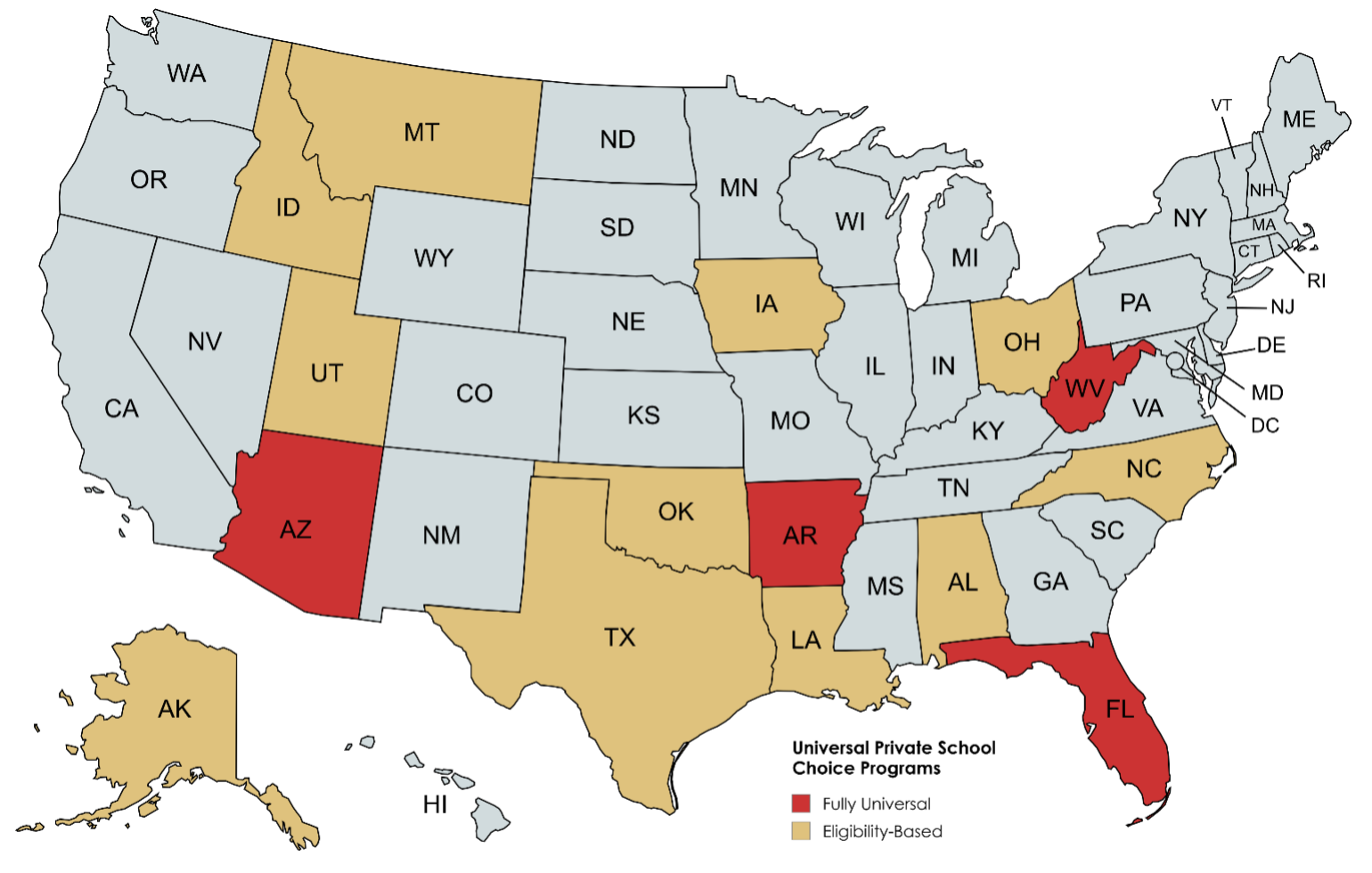
TABLE 4. Select Recent Public and Private School Choice Legislation (2021-2025)
| Category | State | Measure (Year) | Summary |
|---|---|---|---|
| Private School Choice | Alabama | House Bill 129 (2024) | An appropriation of $100 million for refundable income tax credits can be used to pay for tuition, fees, and other qualified education expenses up to $7,000 for students with special needs, from low-income families, and enrolled in certain low-performing public schools, or up to $2,000 per student in a homeschool program – capped at $4,000 per household for homeschooling. |
| Idaho | House Bill 93 (2025) | A recurring $50 million annual appropriation to establish an education tax credit of up to $7,500 for students with special needs or $5,000 for other students to be spent on private school tuition, tutoring, or other educational expenses. | |
| Texas | Senate Bill 2 (2025) | An appropriation of $1 billion for the universal education savings account program will award up to $10,500 annually to students to pay for tuition, tutoring, and other education expenses, as well as $2,000 per year for homeschool students. | |
| Public School Choice | Arkansas | Senate Bill 624 (2025) | Expanded public school choice options by enabling students to transfer without restriction to other public schools within their own districts, maintain open enrollment across district boundaries, and require schools and districts to publish capacity information transparently. |
| Nevada | Senate Bill 460 (2025) | Allowed students in low-performing schools to transfer outside the designated attendance zone. It also provides transportation for such students if their parents take them to an active bus route. | |
| New Hampshire | Senate Bill 210 (2025) | Expanded the existing intradistrict open enrollment policy to include other districts, but leaves responsibility for student transportation to the parents. | |
| Home Schooling | Georgia | Senate Bill 63 (2025) | Required local schools and districts offer any provided exams – such as the PSAT/NMSQT, SAT, ACT, or ASVAB – to any homeschool student in grades six through twelve without cost or fees. |
| Missouri | Senate Bill 63 (2025) | Mandated that school districts or charter schools may not prohibit a homeschooled or virtual student from participating in extracurricular activities. However, students remain subject to academic eligibility requirements and tryouts. | |
| Texas | Senate Bill 401 (2025) | Changed the legal standard for non-enrolled student participation in public school activities to an opt-out standard for districts, but allows students to participate in extracurriculars at a nearby district if the local district opts out of allowing non-enrolled student participation. | |
| Learning Pods or Microschools | Georgia | Senate Bill 246 (2021) | Legally defined learning pods and microschools and exempted such institutions from various state and local education regulations if the parents involved follow state homeschool requirements. |
| Utah | Senate Bill 13 (2024) | Created a legal definition for microschools with 16 or fewer pupils and deregulated zoning restrictions for such educational environments in residential property zones. It also designed micro-education entities as those with 100 or fewer students and allowed greater zoning flexibility for such campuses in non-residential zones. | |
| West Virginia | House Bill 4945 (2024) | Permitted microschools and learning pods, among others, to be able to issue secondary school diplomas if they meet specific requirements. |
Saved by the Bell: Improving Attendance with Counseling, Intervention, and Support for At-Risk Students
States have made tremendous strides in identifying at-risk students and collecting real-time, usable data on truancy or absenteeism. Still, work remains to address the issues that have now been identified. To that end, states are developing and implementing intervention methods to address truancy or absenteeism before they become an issue, as part of a broader cultural shift toward proactive versus reactive policies. A 2025 study from the American Enterprise Institute (AEI) found that, based on data from Rhode Island, which has the most comprehensive daily attendance tracking dashboard, students most often reported being chronically absent for family, safety, well-being, disengagement, or illness-related issues.¹⁰²
Family, safety, and well-being reasons ranged from bullying or a lack of counseling support to familial obligations as caretakers. In West Virginia, lawmakers enacted Senate Bill 568 (2024) to establish a multi-tiered system of support for interventions such as leveraging community resources and engaging with parents of at-risk students to identify root causes or barriers to attendance and collaborate on solutions. Alternatively, states can consider a standard established in Iowa’s Senate File 277 (2025), which added excused absences for students who travel to and attend funerals, weddings, military activities, or other related activities that previously led to truancy charges. In addressing bullying and cyberbullying and their disparate impacts on student attendance, New Hampshire House Bill 108 (2025) expanded the authority and responsibility of local school districts to investigate allegations of harassment, hazing, or bullying across district and state lines to better protect and support students.
For interventions or disengagement concerns, states like Georgia — through Senate Bill 123 (2025) — changed the state’s approach to addressing student attendance issues from an expulsion-based model to one that considers why and what factors lead to absences, seeking to address the root causes of attendance issues. Likewise, through Senate Bill 991 (2025), Texas added a mandate that school districts and public charter schools report daily on students identified as at-risk — those absent for more than 10 percent of the school year or exceeding 30 instructional days — and report these data publicly.
Lastly, although it did not pass out of committee, a unique bipartisan proposal in Ohio — House Bill 348 (2024) — would have established a pilot program series of financial incentives for kindergarten through ninth-grade students for consistent attendance. The pilot would send $25 biweekly to ninth graders or the parents of younger students with a 90 percent or higher attendance rate for those two weeks. Likewise, ninth graders would receive an end-of-the-school-year $500 payment for an attendance rate of 90 percent or better, while parents would receive $150 for younger students.
- Kevin Gee, et al., “Why Were You Absent? Students’ Reasons for Missing School Before and After the Pandemic,” AEI, October 20, 2025.
System Shock: Addressing Enrollment and Funding Challenges in Higher Education
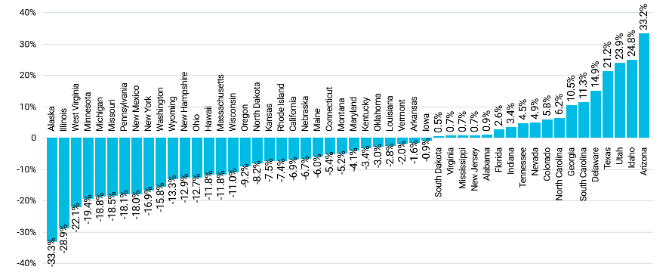
Postsecondary institutions face continuing fiscal strains due to declining enrollment and concerning long-term trends in the number of college-eligible youth. For example, the Western Interstate Commission for Higher Education projects that the number of 18-year-olds graduating from high school will continue to erode over time, dropping more than 13 percent or more than 500,000 youth by 2040. This can have significant economic impacts, with a 2024 economic analysis from IMPLAN indicating that, on average, each college closure results in a loss of nearly $67 million annually in economic impact.¹⁰³ State efforts to address higher education affordability have not been sufficient to address enrollment or programmatic issues.¹⁰⁴ To that end, states must adopt new funding methods — based on output or outcome-based decision-making — and degree standards to adapt to the changing environment of smaller class sizes and student body populations.
FIGURE 8. Percentage Change in State Public Higher Education FTE Enrollment (2009-2024)
In this competitive environment, states are considering efforts to build upon financial aid and tuition support and recognize the non-financial impacts on enrollment, such as students with children or familial obligations and those who face food or housing insecurity. Maryland lawmakers enacted Senate Bill 511 (2025), which requires all public postsecondary institutions in the state to develop a plan regarding policies for pregnant and parenting students, make the policies publicly available, and provide lists of resources to such students. Likewise, through Senate File 288 (2025), Iowa enacted legislation prohibiting discrimination against pregnant or parenting students at any state university or college. Legislators in the Commonwealth of Virginia addressed another enrollment concern through the Hunger-Free Campus Food Pantry Grant Program in Senate Bill 1016 (2025). The legislation requires institutions to provide access to resources to local food banks and support agencies, while also requiring the State Council of Higher Education to report to the General Assembly on the level of recurring appropriations recommended for the grant program.
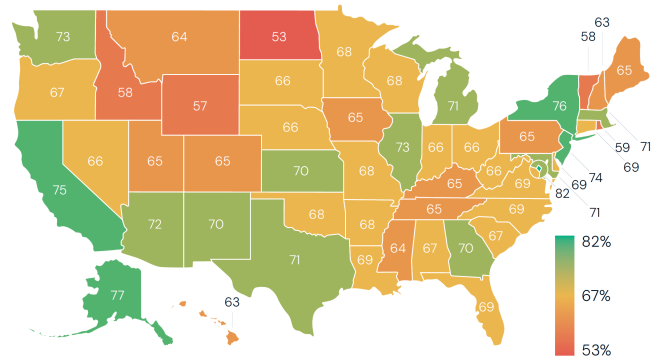
In addition to these enrollment support policies, states also face challenges in higher education finance reform. Most post-secondary funding is enrollment-based and comes from state-developed formulas. Several states have implemented changes to these historical funding models in recent years that may serve as new standards for 2026 and beyond by either adjusting their funding formula and/or providing greater transparency on the return on investment institutions offer to the state and students. Since 2018, Colorado — as a result of the enactment of House Bill 18-1226 — has annually produced a Return on Investment Report for all of the state’s public universities and colleges. Specifically, the law requires the report on how long it takes students to graduate, how many credit hours are earned by students across the state and institutions, the amount of debt taken on and tuition costs across institutions, and earnings after graduation and employment trends by institution and degree.
In Ohio, the Fiscal Year 2026 appropriations bill — House Bill 96 (2025) — included a provision directing the state Chancellor of Higher Education to develop a formula utilizing data from the U.S. Census Post-Secondary Employment Outcomes program and reported employment/earnings reported by graduates of each public institution in the state. The formula will then be used to allocate up to 5 percent — or $100 million — of the state’s share of post-secondary instructional costs to institutions based on these outcomes. Texas revamped the state’s two-year postsecondary funding formula through House Bill 8 (2023), adopting an outcomes-based funding model to replace the existing model driven by enrollment, contact, and instructional hours.
Specifically, funding is now awarded based upon the:
• Number of credentials of value awarded, which included badges, certificates, and degrees;
• Number of credentials of value awarded in high-demand fields;
• Successful transfers from two to four-year institutions; and
• Completion of dual credit coursework.
FIGURE 9. Percentage of Graduates with a Positive 10-year ROI by State for All Degrees
- Jon Marcus, “The number of 18-year-olds is about to drop sharply, packing a wallop for colleges — and the economy,” The Hechinger Report, January 8, 2025.
- Paul Tough, “Americans’ Changing Relationship with Higher Education.” Access to Completion to Success Beyond Completion, Association of Governing Boards of Universities and Colleges, March/April 2024.
ENERGY AND ENVIRONMENT
Liquid Legislation: States’ Ongoing Approaches to Water Rights and Usage
Water has always been a precious resource, but in recent years, Southern states have seen increased discussion on how it is accessed and used. Some legislation has focused on waterway access, a key issue for hunting and fishing enthusiasts. For example, Georgia passed House Bill 1172 (2024), allowing the public to pass through navigable public waterways for hunting and fishing, even in instances when someone holds a private title to portions of the waterway.¹⁰⁵ However, many of the water issues in Southern states have centered on concerns about the amount of water being used by commercial entities, including data centers, which in some cases can require thousands, if not millions, of gallons of water per day.¹⁰⁶
More recently, Missouri passed Senate Bill 82 (2025) that limits large-scale water exports from the state. Under the new law, a permit from the state’s Department of Natural Resources is required to export water outside of the state, and exports are restricted to within 30 miles of the state border.¹⁰⁷ The same year, Oklahoma introduced Senate Bill 259 (2025), requiring the tracking and measurement of commercial groundwater usage. The goal of the legislation was to ensure the state has sufficient data to determine annual groundwater usage and, therefore, monitor how long the groundwater supply is expected to last.¹⁰⁸ Similar legislation was passed in 2024, but vetoed by the governor.¹⁰⁹
Regarding data centers’ water usage specifically, a series of bills were introduced in Virginia allowing local permitting authorities to require data centers to submit a water usage assessment before beginning construction, or to seek alternative cooling methods altogether to minimize water use.¹¹⁰ One of the bills died in committee, while the legislature passed two, both of which were then vetoed by the Governor.¹¹¹ More legislation like this may be seen in more Southern states as data centers continue to be built across the region.
- GA Code § 44-8-5.
- Eli Tan, “Their Water Taps Ran Dry When Meta Built Next Door,” The New York Times, July 16, 2025; Shannon Osaka, “A New Front in the Water Wars: Your Internet Use,” The Washington Post, April 23, 2025; Alejandra Martinez, “Data Centers Are Thirsty For Texas’ Water, But State Planners Don’t Know How Much They Will Need,” The Texas Tribune, September 25, 2025; “Data Centers Draining Resources in Water-Stressed Communities,” University of Tulsa, July 19, 2024.
- Saurav Rahman, “‘Water is Our Most Valuable Resource’: New Law Will Limit Water Exports From Missouri,” Missouri Independent, July 26, 2025.
- Logan Layden et al, “Wondering What Went Down During Oklahoma’s 2025 Legislative Session? Here’s a Recap,” KOSU, June 5, 2025; Kayla Branch, “As Oklahoma Faces Less Water and More Demand, Lawmakers Revive Talk of Stricter Monitoring,” The Frontier, February 14, 2025.
- Graycen Wheeler, “Stitt Vetoes Bill That Would Require Oklahoma Irrigators to Track How Much Groundwater They Use,” KOSU, May 2, 2024.
- Tad Dickens, “Bipartisan legislative effort seeks to regulate data center construction in Virginia.” Cardinal News, January 15, 2025.
- An Act to amend the Code of Virginia by adding in Article 1 of Chapter 22 of Title 15.2 a section numbered 15.2-2209.4, relating to siting of data centers; site assessment; high energy use facility, HB 1601, 2025 Regular Session of the Virginia General Assembly, Virginia, 2025; A Bill to amend the Code of Virginia by adding in Article 1 of Chapter 22 of Title 15.2 a section numbered 15.2-2209.4, relating to siting of data centers; site assessment; high energy use facility, SB 1449, 2025 Regular Session of the Virginia General Assembly, Virginia, 2025; A Bill to amend the Code of Virginia by adding a section numbered 15.2-2223.6, relating to comprehensive plan; data centers; water usage, HB 2377, 2025 Regular Session of the Virginia General Assembly, Virginia, 2025.
Dealing with Disasters: How States Are Retooling Relief and Resilience
With the federal government’s decision to reduce disaster relief funds, states are seeking ways to support their communities in the wake of natural disasters. After the devastation of Hurricane Helene, Florida, Georgia, North Carolina, South Carolina, and Virginia all allocated millions of dollars in relief using state funds.¹¹² The federal government, in turn, did offer some support, including U.S. Department of Agriculture funds to cover some farming and forestry losses in affected states,¹¹³ but it has called on states to take a more extensive role in managing the aftermath of disasters.¹¹⁴
With this, Southern states are considering how to best manage the impact of future disasters. Some, such as Florida and Georgia, passed legislation in 2025 to expedite recovery efforts and protect those affected. Florida passed Senate Bill 180 (2025), which aims to streamline the permitting process for rebuilding and to limit local ordinances on construction requirements.¹¹⁵ In Georgia, the General Assembly passed Senate Bill 201 (2025), which increases consumer protection for homeowners in building contracts following natural disasters.¹¹⁶
To increase disaster resiliency, Southern states have introduced legislation related to early warning systems and hazard mitigation. Following the flood in Kerr County that claimed 119 lives, several bills were introduced in Texas during the 2025 second special session to fund flood management, flood sirens, and improvements for meteorological modeling and forecasting.¹¹⁷ In Virginia, the state’s Community Flood Preparedness Fund was established in 2020.¹¹⁸ However, in 2025, legislators allocated $50 million for the fund, which enabled millions of dollars in additional grants and loans for community flood mitigation projects.¹¹⁹
For states seeking ways to maintain sufficient funds for disaster recovery, it may help to look to peers outside the South. In 2024, Minnesota enacted legislation to ensure the state’s disaster contingency fund stays healthy. If the fund falls below $50 million, any budget surplus is legally required to be allocated directly to the fund.¹²⁰ Not all Southern states have specific disaster contingency funds. Those that do — including Alabama, Florida, North Carolina, and Texas in the CSG South region — may consider similar legislation to Minnesota’s.
- “Governor Ron DeSantis Awards Additional Florida Disaster Fund Relief to Communities Hit by Hurricanes Helene and Milton,” Florida Office of the Governor, December 5, 2024; Jeff Amy, “Georgia Officials Agree to Spend $100 Million On Hurricane Helene Aid For Farms And Forestry,” Associated Press, November 1, 2024; Josie Frost, “$40 Million to Go to Underserved Counties for Hurricane Helene Recovery. Here’s What You Need to Know,” WLTX, June 30, 2025; “Governor Stein Takes Action on Four Bills,” North Carolina Office of the Governor, June 27, 2025; Taylor Hankins, “$50 Million in Hurricane Helene Relief Included in State Budget for Virginia,” WVVA, February 21, 2025.
- “Secretary Rollins Announces $675.9 Million in Disaster Assistance for Farmers in Florida,” U.S. Department of Agriculture, July 21, 2025; “USDA Announces $531 Million in Grant Agreement to Cover Agricultural Losses in Georgia,” U.S. Department of Agriculture, September 30, 2025; “USDA Announces $221.2 Million Grant Agreement to Cover Agricultural Losses in North Carolina,” U.S. Department of Agriculture, September 5, 2025; “USDA Announces $38.3 Million in Grant Agreement to Cover Agricultural Losses due to Hurricane Helene in South Carolina,” U.S. Department of Agriculture, September 30, 2025; “Secretary Rollins Announces $60.9 Million in Disaster Assistance for Farmers in Virginia,” U.S. Department of Agriculture, July 28, 2025.
- Alex Brown, “Trump Denies Disaster Aid, Tells States to Do More,” Stateline, April 25, 2025.
- An Act relating to emergencies, SB 180, 2025 Regular Session of the Florida Legislature, Florida, 2025.
- An Act to amend Code Section 10-1-393 of the Official Code of Georgia Annotated, 2025 Regular Session of the Georgia General Assembly, Georgia, 2025.
- Liz Teitz, “Texas Senate OKs Bill Requiring Sirens in Some Flood-Prone Areas,” San Antonio Express-News, August 19, 2025.
- “Virginia Community Flood Preparedness Fund,” Virginia Resources Authority, accessed October 28, 2025.
- “Virginia Announces $110 Million in Flood Preparedness Funding,” Alexandria Living, October 16, 2025.
- MN Stat § 16A.286.
Power Demands: States Grappling with Increasing Data Center Power Use
Data centers consumed more than 4 percent of all electricity in the U.S. in 2024 — roughly the same amount of electricity Pakistan used that same year.¹²¹ These power needs are almost equally split between equipment operation and cooling, either via cooled air or chilled water.¹²² Virginia has the most data centers of any U.S. state (an estimated 663), though other Southern states like Texas (384) and Georgia (162) are also hotspots for the facilities.¹²³
As states grapple with how to handle these newfound power needs, new legislation has been introduced throughout the South. North Carolina’s House Bill 1002 (2025) would prohibit regulated utilities from placing the costs of providing power to data centers onto other customers.¹²⁴ Georgia’s Public Service Commission approved a similar rule in 2025.¹²⁵ West Virginia enacted legislation that amended state law to allow data centers to operate microgrids — small power systems with generation facilities that connect nearby users and that can be operated independently from the larger grid¹²⁶ — so long as one or more data centers use more than 70 percent of the power generated.¹²⁷
Texas, the state with the second-highest number of data centers in the country,¹²⁸ has taken unique action to ensure that data centers do not overwhelm the state’s power grid. In addition to increased oversight, Senate Bill 6 (2025) allows the Electric Reliability Council of Texas (ERCOT) to shut off power to large-scale industrial consumers, such as data centers, during an emergency.¹²⁹ Other states may not take such drastic action, but states will likely see pressure to address the issue as data centers’ power demands continue to grow.
FIGURE 10. Active and Planned Data Centers Projected to be Built Through 2029
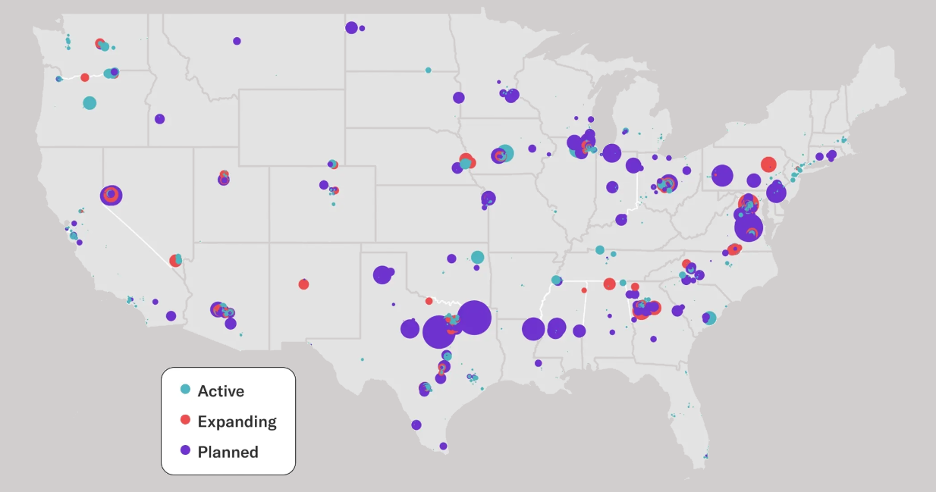
- Rebecca Leppert, “What We Know About Energy Use at U.S. Data Centers Amid the AI Boom,” Pew Research Center, October 24, 2025.
- Martin C. Offutt and Ling Zhu, “Data Centers and Their Energy Consumption: Frequently Asked Questions,” Congressional Research Service, August 26, 2025.
- Theo Burman, “Map Shows States With The Most Data Centers As Electricity Bills Rise,” Newsweek, August 30, 2025; “Georgia Data Centers,” Data Center Map, accessed October 28, 2025.
- An Act prohibiting passing any grid or energy costs incurred solely for serving data centers to rate payers and creating a special commission for data center planning, 2025 Regular Session of the North Carolina General Assembly, North Carolina, 2025.
- “PSC Approves Rule to Allow New Power Usage Terms for Data Centers,” Georgia Public Service Commission, January 23, 2025.
- “Microgrids,” Center for Climate and Energy Solutions, accessed October 28, 2025.
- Steven Allen Adams, “West Virginia Senate Amends, Passes Microgrid and Data Center Bill,” The Parksburgh News and Sentinel, April 12, 2025.
- Burman, 2025.
- Carlos Nogueras Ramos, “Bill That Gives Texas Increased Oversight of Largest Energy Users Wins Legislature’s Approval,” The Texas Tribune, May 26, 2025.
Protecting Power Grids from Attacks and Disasters
Phrases like “blockchain data exchanges,” “quantum-resistant encryption,” and “edge computing” might sound like they come from an international bank’s cybersecurity guide, but they are quickly becoming features in how power grids are protected against online attacks.¹³⁰ As energy production facilities and transmission systems continue to rely more on complex technology, protecting these critical pieces of infrastructure is becoming increasingly essential.
To do so, states are taking steps to regulate grid security, including creating cybersecurity standards and establishing statewide task forces. For example, Arkansas enacted Senate Bill 632 (2019) which authorized the state’s Economic Development Commission to develop cybersecurity programs to protect critical infrastructure, including the electric grid.¹³¹ Texas passed Senate Bill 75 (2025), establishing the Texas Grid Security Commission to enhance the electric grid’s resilience against various hazards, including cyberattacks, solar flares, and electromagnetic pulses.¹³²
To fund these initiatives, legislation has also been introduced to cover the costs. Throughout the country, states have generally taken two different approaches: allocating funding directly to these efforts, like Minnesota has,¹³³ or allowing utilities to pass any associated costs onto customers, as New Mexico did in 2025.¹³⁴
Developing the knowledge and workforce necessary to address these issues is also a key priority for states. The Kentucky Office of Homeland Security has collated a guide for utilities on cybersecurity training and exercises, as well as information on grants, incident assistance, and coordination related to protecting the grid.¹³⁵ Louisiana State University has partnered with the U.S. Cybersecurity and Infrastructure Security Agency (CISA) to model cybersecurity for critical infrastructure to develop talent and technology.¹³⁶
- “John Bedrick, “Securing the Power Grid: Cybersecurity Strategies for Smart Energy Systems,” Power, July 9, 2025.
- Lucas Ropek, “Aggressive Initiative to Shore Up Cybersecurity in Arkansas,” Government Technology, May 16, 2019.
- Luca Cacciatore, “House Lawmakers Pass Measure Creating the Texas Grid Security Commission,” Texas Scorecard, May 21, 2025.
- “Technology Modernization Fund,” Minnesota IT Services, accessed October 29, 2025.
- An Act relating to utilities, 2025 Regular Session of the New Mexico Legislature, New Mexico, 2025.
- “PSC Encouraging Utilities to Up Their Cybersecurity Game,” Kentucky Public Service Commission, February 24, 2025; “Cybersecurity,” Kentucky Office of Homeland Security, accessed October 29, 2025.
- Elsa Hahne, “’A Slam Dunk’: LSU Emerges as National Leader in Cyber for Critical Infrastructure,” Louisiana State University, July 1, 2025.
The Continued Growth of Renewables
Although federal funding has been reduced,¹³⁷ renewable energy projects continue to come online throughout the country and the South. Approximately half of the country’s new generating capacity in 2025 was solar.¹³⁸ Texas continues to lead the country in renewable energy generation.¹³⁹ Across the South, renewables have surpassed coal as a source of electricity generation in Florida, Oklahoma, Texas, and Virginia.¹⁴⁰ In Arkansas, the state’s first wind farm — a 135MW facility near Wynne — became operational in October 2025.¹⁴¹
In some cases, utility companies are either building these facilities or choosing to rely on them through power purchase agreements. Georgia Power recently announced five utility-scale solar power purchase agreements totaling 1,068MW.¹⁴²
However, the growth of renewables in the region is partly due to private companies investing in such projects. Meta, the parent company of Facebook, has invested in solar projects in Alabama,¹⁴³ Arkansas,¹⁴⁴ Georgia,¹⁴⁵ Louisiana,¹⁴⁶ Mississippi,¹⁴⁷ Missouri,¹⁴⁸ North Carolina,¹⁴⁹ South Carolina,¹⁵⁰ Tennessee,¹⁵¹ and Virginia.¹⁵² Tech giants such as Amazon, Google, and Microsoft have also made investments in renewable energy in Kentucky,¹⁵³ Oklahoma,¹⁵⁴ Texas,¹⁵⁵ and West Virginia.¹⁵⁶ These investments will likely have a broader impact beyond building power facilities; they may lead to continued growth in the sector through workforce development and maintenance.
Southern state legislatures are likely to continue seeing legislation and public-private partnerships related to renewable projects. Among the considerations facing policymakers and industry leaders are permitting and siting requirements for such facilities, increasing infrastructure costs for energy transmission, and potential issues related to energy storage.
- Christa Marshall, “Clean Energy Project Cancellations Surge Above $24B,” Energy Wire, October 22, 2025.
- “U.S. Developers Report Half of New Electric Generating Capacity Will Come from Solar,” U.S. Energy Information Administration, August 20, 2025.
- Dan Gearino, “Texas Leads U.S. Renewable Energy Generation by a Country Mile,” Inside Climate News, March 6, 2025.
- “Wind and Solar Overtake Coal in Historic US Clean Electricity Landmark,” Ember, accessed October 29, 2025.
- Sydney Sasser, “First Arkansas wind farm operating in Cross County,” Arkansas Democrat Gazette, October 14, 2025.
- “Georgia Power Secures PPA Approval for Five New Solar Projects” Power Technology, September 8, 2025.
- Erin Wise, “Companies Investing in Solar Energy Production to Power Alabama Forward,” ABC 3340, September 21, 2023.
- “Meta’s Solar Project in Arkansas and Illinois Secures Financing,” Arkansas Business, March 6, 2025.
- Savannah Chandler, “Meta Partners with Walton EMC and Silicon Ranch for New Solar Projects,” Walton EMC, January 17, 2023.
- “Entergy Louisiana Will Power Meta’s Largest-ever $10B AI Data Center,” Daily Energy Insider, December 2024.
- “Golden Triangle II Solar + Storage,” Origis Energy, accessed October 29, 2025.
- “Arevon and Meta Announce Long-Term Contracts for 349 Megawatts of New Solar,” Arevon, March 5, 2024.
- “Meta’s Forest City Data Center,” Meta, accessed October 29, 2025.
- Jessica Holdman, “Meta Invests in SC Solar as Utilities Expect More Clean Energy-Conscious Firms to Finance Projects,” South Carolina Daily Gazette, August 26, 2025.
- Dan Swinhoe, “TVA & Silicon Ranch Break Ground on 70MW Solar Farm Serving Meta’s Tennessee Campus,” Data Center Dynamics, March 29, 2022.
- “Meta Friends Virginia,” Virginia Economic Development Partnership, accessed October 29, 2025.
- “Duke Energy Unveils Kentucky’s Largest Utility-Scale Rooftop Solar Site at Amazon Air Hub,” Duke Energy, July 6, 2023.
- Jonathan Touriño Jacobo, “Leeward, Google Sign 724MW Solar PV PPA in Oklahoma,” PVTech, January 16, 2025.
- Jennifer McDermott, “One of the Largest Solar Projects in the US Opens in Texas, Backed by Google,” Associated Press, October 18, 2024.
- Mark Segal, “Microsoft Signs 335 MW Wind Power Purchase Agreement in West Virginia,” ESG Today, May 1, 2025.
Energy and Resource Consortia
Common resources and similar sectors tie certain states together. For example, Louisiana, Oklahoma, Texas, and West Virginia are all among the top ten natural gas-producing states (with Texas being the leader overall).¹⁵⁷ Coastal basins from Texas to Georgia offer the country’s best underground storage potential for carbon sequestration due to the large saline aquifers found there.¹⁵⁸ The Smackover Formation, a large, porous limestone geologic unit that stretches from northwest Florida to southwest Texas and includes portions of Alabama, Arkansas, Louisiana, and Mississippi, is a treasure trove for lithium.¹⁵⁹
Such standard features have led states, and in some cases, tribal nations, to form consortia to advance common interests and increase their economic potential. For example, the Western States and Tribal Nations (WSTN) Energy Initiative works to develop and export natural gas from the Rocky Mountain region to Asian markets. It is made up of Colorado, New Mexico, Utah, Wyoming, the Ute Indian Tribe of the Uintah and Ouray Reservation, the Southern Ute Indian Tribe, and the Jicarilla Apache Nation.¹⁶⁰
As Southern states continue to look for economic advantages, either through expanding already-existing industries or supporting the early growth of new ventures, joining together to form consortia based on similar goals may be beneficial for future growth.
- “Natural Gas Gross Withdrawals and Production,” U.S. Energy Information Administration, accessed October 29, 2025.
- “Which Area is the Best for Geologic Carbon Sequestration,” U.S. Geological Survey, accessed October 29, 2025.
- Katherine J. Knierim et al, “Evaluation of the Lithium Resource in the Smackover Formation Brines of Southern Arkansas Using Machine Learning,” Science Advances, Vol 10, Iss 39, September 27, 2024.
- “About Us,” Western States and Tribal Nations Energy Initiative, accessed October 29, 2025.
FISCAL AFFAIRS AND GOVERNMENT OPERATIONS
Any Port(ability) in a Storm: States Consider Roles Supporting Benefits Portability for Workers
Recent news of major film productions moving overseas to avoid expensive healthcare costs and the growing trend of worker mobility has shed light on select state efforts to establish voluntary, opt-in benefits portability plans to allow temporary or mobile workers to have health coverage without overburdening employers. Similar to state trends in individual retirement savings accounts, these state-led opt-in programs can offer significant benefits with minimal costs or employer burdens. As the nature of work shifts toward greater mobility and contingent employment, traditional employer-based benefits systems are leaving many workers without essential protections. States are responding with innovative legislation to enhance benefits portability — ensuring that workers can retain health coverage, retirement savings, and other benefits across job changes. Notably, this policy proposal has garnered support from entities as diverse as the Aspen Institute, R Street, and the Mercatus Center, viewed as a means of promoting worker autonomy and empowerment.¹⁶¹,¹⁶²,¹⁶³
Closer to home, Georgia launched a limited pilot program between the state and gig economy employer DoorDash. The pilot was open to employees who earned at least $1,000 in the first quarter of 2025, exclusive of tips. The employer deposits 4 percent of the worker’s non-tip earnings into the fund. Workers could use the benefits for retirement, health, dental, and vision insurance, and paid time off expenses.¹⁶⁴ This pilot, which was supported by the governor and concluded in July 2025, may serve as a model for other states as they seek to incentivize or remove barriers to developing these unique benefit plans.
TABLE 5. Recent State Benefits Portability Measures
| State | Measure (Year) | Status | Summary |
|---|---|---|---|
| Alabama | Senate Bill 86 (2025) | Enacted | Created a voluntary, tax-advantaged portable benefits program for independent contractors and gig workers, allowing both the employer and employee to receive state tax deductions for contributions to these accounts. |
| Rhode Island | House Bill 5941 (2025) | Recommended for Further Study | It would have created a framework for both governmental and private entities to offer portable benefits insurance plans with voluntary contributions. |
| Tennessee | Senate Bill 1377 (2025) | Enacted | Provides a safe harbor for employers to voluntarily contribute to benefits for independent contractors including health insurance, income replacement insurance, life insurance, retirement benefits, and other benefits. |
| Utah | House Bill 223 (2023) | Enacted | Allows government and private entities to offer a portable benefit plan with voluntary contributions and does not hold any such contributions against or as proof of employment status. |
| West Virginia | House Bill 2852 (2025); House Bill 5244 (2024) | Died in Committee | Created the West Virginia Portable Insurance Benefit Plan, a state-sponsored initiative that provides portable insurance benefits to independent contractors with voluntary contributions from employers. |
| Wisconsin | Assembly Bill 269 (2025) | Vetoed | It would have allowed employers and employees to voluntarily open a portable benefits account if workers earn at least $750 in a calendar quarter as independent contractors, drivers, or gig workers. |
- Liz Farmer, “Legislating the Gig Worker Economy,” Rockefeller Institute of Government, June 25, 2020.
- Liya Palagashvili, “Bringing Portable Benefits to the Independent Workforce: Overview,” Mercatus Center at Georgetown University, July 24, 2025.
- Marc Hyden, “Instead of subsidy fights, Georgia should allow ‘portable’ benefits,” R Street Institute, October 20, 2025.
- “DoorDash Announces Portable Benefits Savings Pilot Program Expanding To Dashers in Georgia,” DoorDash, January 10, 2025.
How Federal Actions May Lead to State Budget Deficits and Funding Gaps
Federal government actions — through legislation, regulation, and fiscal policy — have a significant and multifaceted impact on state budgets. These impacts occur both directly, through changes in federal funding and mandates, and indirectly, through broader economic conditions shaped by federal decisions. Ten Southern states received more federal funds than they sent in tax receipts to the federal government, marking an overreliance on federal support. This leaves states vulnerable if they fail to proactively consider federal efforts to reduce expenses.
Furthermore, according to Moody’s Analytics, more than 20 states are at risk of recession or an economic downturn as of October 2025, primarily due to federal job cuts, tariff increases, and additional downstream effects of federal policy and funding decisions. In the South, this includes Georgia, Mississippi, Virginia, and West Virginia. In the same state-by-state assessment, Arkansas, Missouri, and Tennessee were identified as “treading water” or remaining flat in regard to the strength of their state economies. The good news is that more than half the South remains in a state of economic expansion. Although states that are most dependent on agriculture and manufacturing remain the most likely to be at risk for future negative impacts, meaning many states in the South may still need to remain cognizant of federal action from Washington, D.C., and be cautious with fiscal actions in 2026.¹⁶⁵
FIGURE 11. Federal Funds as Percentage of State Revenue (Fiscal Year 2023)
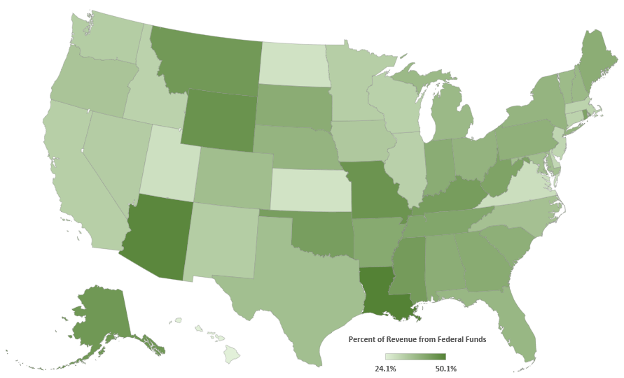
FIGURE 12. Moody’s Estimated Strength of State Economies (as of October 9, 2025)

- Eleanor Pringle, “Roughly half of U.S. states are effectively in a recession and ‘hanging on by their fingertips,’ Moody’s chief economist says,” Fortune, October 9, 2025.
Service and Security: Allowing Campaign Funds for Security Costs and Protections
The tragic assassination of state lawmakers in Minnesota has shed light on the risks state lawmakers face today. Similar to trends allowing lawmakers to use excess campaign funds to cover childcare or health expenses, several states have considered allowing lawmakers to utilize these funds to provide necessary security for themselves and their families. Currently, only three states explicitly permit the use of campaign funds for security services for candidates and their families.
At the same time, two more states — Colorado and Wisconsin — provide an exemption to personal use restrictions if campaign money is spent on reasonable security measures. In Wisconsin, the exemption only applies to the use of government vehicles for candidate security purposes.¹⁶⁶ No other state appears to address this issue explicitly in its state law.
TABLE 6. Allowable Expenses of Campaign Funds for Security Services
| State | Services Candidate | Family Members | Campaign Staff | Cybersecurity / Other Services | Citation(s) |
|---|---|---|---|---|---|
| Colorado | Yes | Yes | — | — | C.R.S. 1-45-117 |
| Louisiana | Yes | Yes | Yes | Yes (Cybersecurity) | La. R.S. 18 §1505.2 |
| Minnesota | Yes | Yes | — | Yes (Identity Theft) | Minn. Stat. 10A.01(26) |
- Wis. Stat. § 11.1206.
The “Path to Zero” Debate and Tax Competitiveness Concerns
As states attempt to reduce and, in some instances, phase out the individual income tax and lower local property tax burdens on citizens, a continuing debate surrounds the actual impacts of these tax reforms and the need to fill the sizable budget gaps that this “race to zero” will create. Additionally, the growing competition among states to attract businesses and interstate migration is placing a greater emphasis on balancing lower tax burdens with rising needs for infrastructure and other costs. As seen in Table 8 (“CSG South State Maximum Personal Income Tax Rate as of January 1”), 10 of the 12 CSG South states that impose an individual income tax have made recent systemic changes to the tax structure, tax rates, or both, and many are continuing to convene study committees and introduce legislation that further alters the individual income tax.
As a first step toward systemic change in individual income taxation, many states transitioned from a graduated (often referred to as “progressive”) tax structure that imposes progressively higher rates on higher levels of income, to a “flat tax” in which all taxable income is taxed at the same rate. Early movers in the South included Georgia and Mississippi which transitioned to a flat tax in 2022, and Louisiana, which made the same transition in 2024.
TABLE 7. Recently Enacted Tax Reduction Measures in the South
| State | Measure (Year) | Status | Summary |
|---|---|---|---|
| Georgia | House Bill 1437 (2022) | Enacted | Established a 5.75 percent flat tax rate, reaching 5.25 percent by 2024. |
| Louisiana | House Bill 10 (3rd Ex. 2024) | Enacted | Established a flat 3 percent rate for individual income taxes and 5.5 percent for corporate income. |
| Mississippi | House Bill 531 (2022) | Enacted | Established a phased-in 4 percent flat individual income tax rate. |
| Missouri | House Bill 798 (2025) | Passed First Chamber | Would have set an individual income tax flat rate of 4.7 percent with a gradual reduction to 3.7 percent over 10 years. |
| Oklahoma | Senate Bill 304 (2025) | Passed First Chamber | Would have established a flat 4.75 percent individual income tax rate beginning in tax year 2025. |
| South Carolina | House Bill 4216 (2025) | Passed First Chamber | Would have established a 3.99 percent flat tax rate, with potential revenue triggers allowing a future reduction to 2.49 percent. |
Despite recently passing a flat tax, Mississippi took further action during the 2025 session with the passage of House Bill 1 (2025), which will lower the tax rate to a flat 3.0 percent by 2030 before phasing out the individual income tax entirely.¹⁶⁷ These paths to zero all feature varying triggers, ranging from general revenues to reserve funding, to systematically phase out the individual income tax. It also lowers the sales tax levied on groceries to 5 percent from 7 percent.¹⁶⁸
For the post-2030 phaseout to occur, the following surplus metrics must be met from the fully funded reserve fund in relation to the cost of further reducing the flat income tax:
• If the surplus is between 0.85 percent and 1.0 percent of the cost of a 1.0 percent rate cut, the flat rate is reduced by 0.2 percent;
• If the surplus is 1.0 percent or more, but less than 1.15 percent, of the cost of a 1.0 percent rate cut, the flat income tax is reduced by 0.25 percent; and
• If the surplus is 1.15 percent or more of the cost of a 1.0 percent rate cut, the flat income tax is reduced by 0.3 percent.¹⁶⁹
In the Sooner State, lawmakers enacted Oklahoma House Bill 2764 (2025), reducing the state’s top tax tier’s individual income tax rate to 4.5 percent with triggers set for continuing reductions to zero. Specifically, if the state’s total revenue for a fiscal year is greater than the largest previous amount plus 1.25 times the amount that a 0.25-point income tax cut would cost, then the individual income tax rates across all tiers are reduced by 0.25 points.¹⁷⁰ Unlike the Mississippi model discussed earlier, Oklahoma’s does not account for reserve funding in its calculated reductions. As such, these two distinct models may provide multiple paths forward for lawmakers on the road to zero.
In Georgia, the Senate Special Committee on Eliminating Georgia’s Income Tax has met throughout the 2025 interim to discuss the potential elimination of the state’s flat individual income tax, setting the stage for a potential push to pass “path to zero” legislation in 2026. Notably, lawmakers have proposed eliminating numerous corporate tax exemptions, which total more than $30 billion, to offset the lost revenue from a repealed income tax.¹⁷¹
TABLE 8. CSG South State Maximum Personal Income Tax Rate as of January 1 (2016-2025)
| State | Personal Income Tax Structure | 2016 Flat/ Maximum Tax Rate | 2019 Flat/ Maximum Tax Rate | 2022 Flat/ Maximum Tax Rate | 2025 Flat/ Maximum Tax Rate |
|---|---|---|---|---|---|
| Alabama | Graduated | 5.00% | 5.00% | 5.00% | 5.00% |
| Arkansas | Graduated | 6.90% | 6.90% | 4.90% | 3.90% |
| Florida | N/A | — | — | — | 5.00% |
| Georgia* | Flat Rate | 6.00% | 5.75% | 5.75% | 5.39% |
| Kentucky* | Flat Rate | 6.00% | 5.00% | 5.00% | 4.00% |
| Louisiana* | Flat Rate | 6.00% | 6.00% | 4.25% | 3.00% |
| Mississippi* | Flat Rate | 5.00% | 5.00% | 5.00% | 4.40% |
| Missouri | Graduated | 6.00% | 5.00% | 5.30% | 4.70% |
| North Carolina | Flat Rate | 5.75% | 5.25% | 4.99% | 4.25% |
| Oklahoma | Graduated | 5.00% | 5.00% | 4.75% | 4.75% |
| South Carolina | Graduated | 7.00% | 7.00% | 6.50% | 6.20% |
| Texas | N/A | — | — | — | 5.00% |
| Virginia | Graduated | 5.75% | 5.75% | 5.75% | 5.75% |
| West Virginia | Graduated | 6.50% | 6.50% | 6.50% | 4.82% |
SOURCE: https://taxfoundation.org/data/all/state/state-income-tax-rates
- Ashleigh M. Paige, ”Mississippi Governor Signs Legislation Phasing Out Individual Income Tax.” Thomson Reuters, April 1, 2025.
- ”Mississippi Reduces Sales Tax Rate on Groceries, Effective July 1, 2025.” Sales Tax Institute, June 9, 2025.
- Joe Bishop-Henchman, ”Mississippi Moves to End Individual Income Tax – Here’s What Taxpayers Need to Know.” National Taxpayers Union Foundation, April 8, 2025.
- ”Oklahoma Legislature Sends Comprehensive Tax Cuts and Modernization Plan to Governor.” Oklahoma Senate, May 22, 2025.
- Ty Tagami, “Top Senate Republicans committed to cutting, even eliminating, state income tax,” Georgia Public Broadcasting, October 22, 2025.
Won’t You Be My Neighbor? Foreclosure Protections, Reforms, and Community Associations
The specter of 2008 remains as states again face concerns over homeownership, mortgage rates, and foreclosures in an environment where corporate homeownership has an outsized influence on the housing market. For example, Delaware, in response to the 2008 financial crisis, established an Office of Foreclosure Prevention and Financial Protection and a Residential Foreclosure Mediation Division with the state’s Department of Justice. These offices and programs offer counseling, financial education, money management, and legal services to families whose residential properties are at risk of or currently in foreclosure.¹⁷² Legislators unanimously approved Senate Bill 245 (2024) to continue the program and remove any sunsetting or expiratory language. Other states may wish to consider this, as, according to real estate data, two Southern states — Florida and South Carolina — are among the ten states with the highest rates of foreclosure per housing unit (HU).¹⁷³
FIGURE 13. State Reported Foreclosure Activity (September 2025)
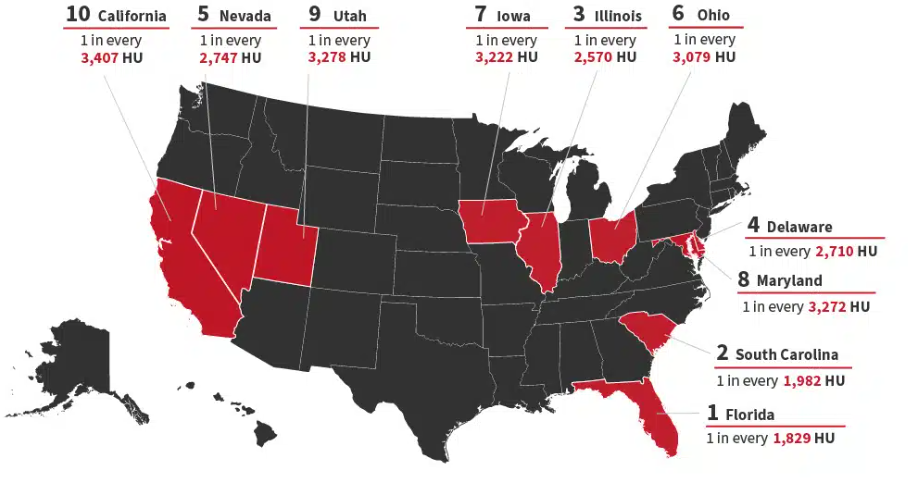
Additionally, higher scrutiny is also being placed on the role community associations play in homeownership as lawmakers grow skeptical over the growing power these associations must foreclose on properties for minuscule fines or fees. As such, states are considering efforts to limit community association foreclosures, as seen in Arizona, provide more protections for property owners, like in Colorado, and establish independent offices to investigate and mediate disputes, as in Utah. This is especially pressing in the ever-growing South, as the region has seen the country’s largest growth of community associations over the past decade in Florida, Georgia, North Carolina, and Texas.
FIGURE 14. Community Associations by State
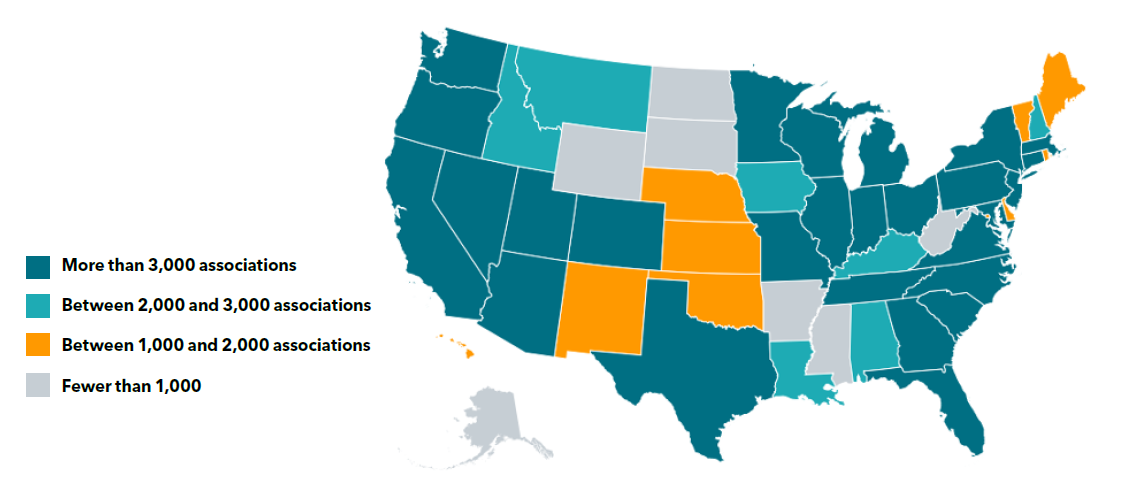
TABLE 9. Recently Enacted Community Association Foreclosure Laws
| State | Measure (Year) | Summary |
|---|---|---|
| Arizona | Senate Bill 1494 (2025) | Limits associations’ ability to file liens on an owner’s property unless the individual has been delinquent for 18 months or at least $10,000, whichever occurs first. |
| Colorado | House Bill 1043 (2025) | Requires associations to provide unit owners with a notice regarding credit counseling services and intent to foreclose at least 30 days before initiating foreclosure. Also requires notice outlining the right to cure nonpayment and file a motion to stay the sale. If a motion is filed, the owner must submit a fair market value or alternate property value and list the unit at that price. |
| Utah | House Bill 217 (2025) | Establishes a Homeowners’ Association Ombudsman Office within the Department of Commerce to handle complaints and issue regulatory advisory opinions regarding community association laws. |
| Virginia | House Bill 880 (2024) | Prohibits community associations from foreclosing on a lien secured by a judgment for $5,000 or less (excluding interest, fees, or other add-ons) when the residence is the debtor’s homestead and primary residence. |
- Del. Code 29 § 2518.
- Kiri Blakeley, “2 Southern States Lead the U.S. With the Highest Number of Foreclosures,” Realtor.com, May 15, 2025.
FEATURE SPOTLIGHT
(Not) Lighting Up: Regulation and Considerations for Burnless Tobacco
In recent years, more states have passed regulations on burnless tobacco products. These products differ from cigarettes, which burn tobacco, and e-cigarettes, which use an electronic heat source to heat liquid that usually contains nicotine.¹⁷⁴ Instead, burnless tobacco products heat up, but do not burn, processed tobacco to create an aerosol that is then inhaled.¹⁷⁵ They can also be referred to as “non-combusted cigarettes,”¹⁷⁶ “heat-not-burn (HNB) tobacco,”¹⁷⁷ or “heated tobacco.”¹⁷⁸ Though such products have been promoted in the U.S. since the 1960s,¹⁷⁹ the mid-2010s saw the introduction of several new variations¹⁸⁰ and demand seems to be growing; Philip Morris International reported a 28 percent increase in the number of burnless tobacco products they shipped worldwide (compared to a slight decrease in traditional cigarettes).¹⁸¹
However, only three of the fifteen Southern states have defined or otherwise included these products in state code: Alabama,¹⁸² Mississippi,¹⁸³ and Virginia.¹⁸⁴ Other states, such as Louisiana¹⁸⁵ and Missouri,¹⁸⁶ define cigarettes in a way that could include burnless tobacco, but the definition is unclear. Legislation was introduced in Florida that would have revised the definitions of “cigarettes“ and “tobacco products“ in Florida in 2025.¹⁸⁷ Although this previous effort died in committee, a similar bill has been introduced for the 2026 session.¹⁸⁸ As initially filed, this bill would introduce a definition of “heated tobacco products” (HTPs) to state statute and give the product unique tax treatment from the state’s existing cigarette excise tax.¹⁸⁹
In addition to defining burnless tobacco, Alabama, Mississippi, and Virginia have also placed a specific excise tax on these products. In each of these states, the excise tax on burnless tobacco products is less than the same tax on traditional cigarettes. Legislation has been introduced in two other Southern states, Tennessee and West Virginia, that would impose an excise tax on burnless tobacco, but none of these measures have passed. In Tennessee, the suggested tax was 45 cents per 20 (compared to $1.41 on a pack of cigarettes), and in West Virginia, the suggested tax was 60 cents per 20 (compared to $1.20 for a pack of cigarettes).¹⁹⁰ In addition, SB 680 was introduced during Oklahoma’s 2025 legislative session, which would have added burnless tobacco to that state’s tobacco definition and set the excise tax at 50 percent of the cigarette tax. It has been carried over to the 2026 session.¹⁹¹
As these products continue to rise in popularity, Southern state leaders may find themselves adding definitions and determining applicable excise taxes in the near future.
TABLE 10. Current Burnless Tobacco and Cigarette Tax Rates in Select CSG South States
| State | Burnless Tobacco Tax | Cigarette Tax |
|---|---|---|
| Alabama | $0.017 per unit (34 cents per 20 pack) | $0.03375 per cigarette (67.5 cents per 20 pack) |
| Mississippi | $0.0125 per unit (25 cents per 20 pack) | $0.034 per cigarette (68 cents per 20 pack) |
| Virginia | $0.0225 per unit (45 cents per 20 pack) | $0.03 per cigarette (60 cents per 20 pack) |
- “How are Non-Combusted Cigarettes, Sometimes Called Heat-Not-Burn Products, Different from E-Cigarettes and Cigarettes?,” U.S. Food and Drug Administration, May 1, 2020.
- U.S. Food and Drug Administration, 2020; Centers for Disease Control, 2024.
- Ibid
- Nicholas D. Fried and Jason D. Gardner, “Heat-Not-Burn Tobacco Products: an Emerging Threat to Cardiovascular Health,” American Journal of Physiology- Heart and Circulatory Physiology, Vol 319,Iss 6, October 2, 2020.
- “Heated Tobacco Products,” Centers for Disease Control, May 15, 2024.
- Karma McKelvey et al, “Heated Tobacco Products Likely Appeal to Adolescents and Young Adults,” Tobacco Control, Vol 27, November 2018.
- Richard O’Connor et al, “Evolution of Tobacco Products: Recent History and Future Directions,” Tobacco Control, Vol 31, March 2022.
- “2024 Annual Report,” Philip Morris International, 2025.
- An Act relating to the tobacco tax, HB 357, 2025 Regular Session of the Alabama Legislature, Alabama, 2025.
- MS Code § 27-69-3.
- VA Code § 58.1-1000.
- LA Rev Stat § 26:901.
- MO Rev Stat § 149.011.
- An Act relating to heated tobacco products, HB 785, 2025 Regular Session of the Florida Legislature, Florida, 2025.
- Revises definitions of “cigarette” & “tobacco products” to exclude certain types of products containing tobacco & defines “heated tobacco product.”
- Janelle Irwin Taylor, “Unsuccessful last year, Chase Tramont again tries for heated tobacco product regulatory change.” Florida Politics, November 10, 2025.
- AN ACT to amend Tennessee Code Annotated, Title 67, Chapter 4, relative to heated tobacco products, SB 893, 2025 Regular Session of the Tennessee General Assembly, Tennessee, 2025; A Bill to amend and reenact §11-17-2, §11-17-3, §11-17-4b, and §11-17-17 of the Code of West Virginia, HB 2762, 2025 Regular Session of the West Virginia State Legislature, West Virginia, 2025; Campaign for Tobacco-Free Kids, July 1, 2025.
- An Act relating to heated tobacco products, SB 680, 2025 Regular Session of the Oklahoma State Legislature, Oklahoma, 2025.
Bracing for the Boom: The Silver Tsunami and Pension Pressures on States
The rising “Silver Tsunami” of retirements continues to place extraordinary burdens on workers and employers, who face continually rising costs to support increasing numbers of retirees in an increasingly expensive world. By reforming payment plans, reconsidering cost-of-living allowances, and considering job-sharing and other reforms, states can lower the impact of retirements on public sector workforces. With 11 of the 15 states in the South reporting more than a quarter of their state’s population comprised of 45 to 64-year-olds in the 2020 Census, the coming decades will require significant retirement infrastructure and support to better prepare for the coming wave of retirements.
In addition to the demographic impacts on the economy and workforce, states have also faced increasing burdens in the form of direct spending on pensions. According to the National Association of State Retirement Administrators (NASRA), in the South, only Arkansas, Louisiana, Oklahoma, Tennessee, and West Virginia saw a decline in their pension contributions from Fiscal Year 2013 to Fiscal Year 2022.
FIGURE 15. Percentage of Population Aged 45 to 64 Years (2020 Census)

TABLE 11. State and Local Government Contributions to Pensions as Percentage of All Direct General Spending
| State | Fiscal Year 2013 (%) | Fiscal Year 2022 (%) | Change Over Time (%) |
|---|---|---|---|
| Alabama | 2.86 | 3.78 | 32.2 |
| Arkansas | 3.80 | 3.45 | —9.2 |
| Florida | 2.25 | 2.94 | 30.7 |
| Georgia | 2.92 | 4.52 | 54.8 |
| Kentucky | 4.24 | 5.59 | 31.8 |
| Louisiana | 7.79 | 5.56 | —28.6 |
| Mississippi | 3.81 | 4.16 | 9.2 |
| Missouri | 4.03 | 4.42 | 9.7 |
| North Carolina | 2.13 | 3.36 | 57.7 |
| Oklahoma | 4.29 | 4.14 | —3.5 |
| South Carolina | 3.40 | 4.12 | 21.2 |
| Tennessee | 2.96 | 2.75 | —7.1 |
| Texas | 2.84 | 3.04 | 7.0 |
| Virginia | 3.80 | 4.29 | 12.9 |
| West Virginia | 5.22 | 3.80 | —27.2 |
| CSG South Average | 3.76 | 3.99 | 6.4 |
| U.S. Average | 4.13 | 5.11 | 23.7 |
States are convening task forces and study groups to understand the coming challenges better and prepare state laws to handle the influx of retirees, while ensuring quality care continues. This includes Maryland Senate Bill 457 (2025), which directed the State Retirement Agency to convene a working group to study the relationships between state and local retirement systems, particularly the transfers of member service time and contributions. Likewise, in North Dakota, lawmakers passed House Bill 1371 (2025) to conduct a legislative management study on the options for providing affordable and quality uniform group health insurance benefits coverage to retired peace officers. And in Texas, lawmakers – via House Bill 4945 (2025) – directed the Teachers Retirement System of Texas to study the feasibility of providing alternative service retirement benefits to system members who were engaged or employed in positions related to wildland firefighting. Beyond these interim or temporary study groups, states may wish to follow the lead of Vermont, which created a comprehensive state plan for aging in House Bill 611 (2020) as a means to ensure collaboration and uniformity of mission amongst the varied state entities serving the aging populations and retirees. This comprehensive plan enables the state to remain ahead of the tsunamic impacts as the U.S. faces demographic changes and an increasing retiree population.
HUMAN SERVICES AND PUBLIC SAFETY
Bridging the Gap: Medicaid Funding Strategies in Wake of Federal Cuts
The passage of the One Big Beautiful Bill Act (OBBBA) (HB 1) marked a change in Medicaid funding strategies for states. Historically, states have funded their portion of Medicaid through their individual general funds and other sources, namely provider taxes.¹⁹² OBBBA has imposed a gradual decrease in provider tax allowance, a move that will save the federal government an estimated $326 billion over the next decade.¹⁹³ States now face the challenge of identifying alternative and sustainable funding strategies or limiting their state’s Medicaid eligibility. Making cuts could result in a substantial decrease in the number of insured. In fact, the Congressional Budget Office (CBO) predicts that approximately 11.8 million people could lose health insurance coverage over the next decade.¹⁹⁴
FIGURE 16. FY2026 Federal Medical Assistance Percentage for Medicaid by State
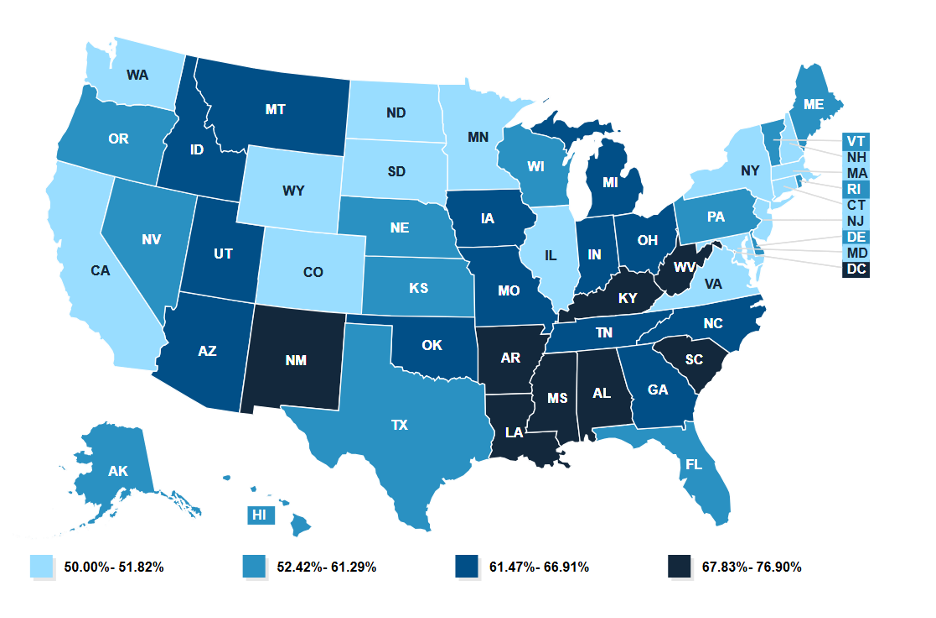
Federal law permits states to impose taxes on providers, such as hospitals and long-term care facilities, to help fund Medicaid. These taxes must be broad and uniformly applied, and taxpayers must not be held harmless.¹⁹⁵ This means that the provider tax must be applied to all providers within a provider classification, regardless of whether a provider accepts Medicaid or not, and the state cannot guarantee the taxpayer will receive their tax revenue back beyond the “safe harbor” threshold of 6 percent or less of net patient revenues from treating patients. Most states (all except Alaska) utilize the revenue generated by provider taxes to increase their share of Medicaid funding for their state. Historically, this method has also been used to increase the amount of federal Medicaid funding, as the federal government supplements state funding based on the Federal Medical Assistance Percentage (FMAP), rather than a set amount. This percentage ranges from a statutory minimum of 50 percent to a maximum of 83 percent and is determined based on a state’s per capita income relative to the national average.¹⁹⁶
One of the provisions of OBBBA restricts states that have expanded Medicaid under the Affordable Care Act on how they can use provider taxes moving forward. The Act will gradually lower what is known as the “safe harbor” percentage, which would effectively decrease the allowable provider tax and therefore the amount of funding the federal government will be obligated to match. Between fiscal years 2028 and 2034, the provider tax threshold will decline to 3.5 percent.¹⁹⁷ The impact of this will depend on the number of provider taxes a state uses and the rate for each tax. Currently, of the Medicaid expansion states in the CSG South region, Louisiana, Missouri, Oklahoma, and Virginia have provider taxes over 3.5 percent of net patient revenues.
FIGURE 17. FY2026 Federal Medical Assistance Percentage for Medicaid by State
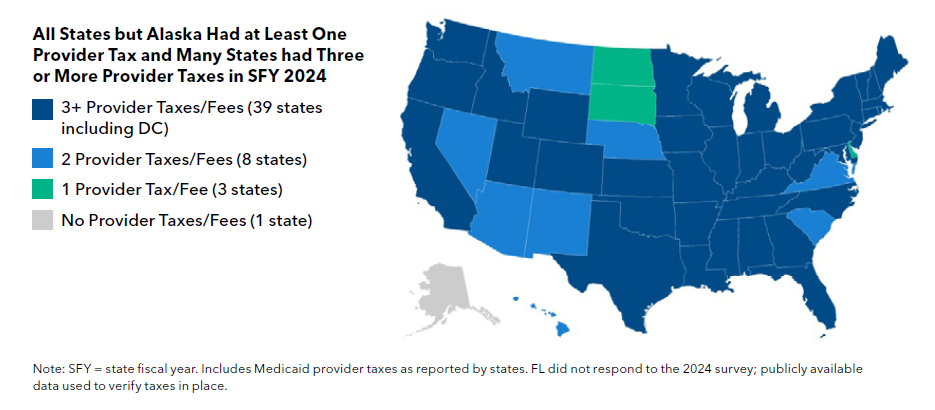
The primary question state leaders will be grappling with moving forward is, “How are we going to pay for this?” When Medicaid funding has been cut in the past, states have responded by reducing benefits, restricting eligibility, lowering provider payments, and finding ways to balance their budgets — either through tax increases or reallocation of funds.¹⁹⁸ Some states have already taken steps to reduce Medicaid expenses in preparation. For example, earlier this year, North Carolina’s Department of Health and Human Services implemented a minimum 3 percent cut in Medicaid provider payments.¹⁹⁹ As many of the CSG South states have their sights set on reducing personal income tax, states will be faced with similar policy decisions throughout the region.
- Coleman, Akeiisa. 2025. “How Do We Pay for Medicaid?” Commonwealthfund.org, March, 2025.
- KFF. 2025. “A Closer Look at the Work Requirement Provisions in the 2025 Federal Budget Reconciliation Law | KFF.” KFF. July 30, 2025.
- “Estimated Budgetary Effects of an Amendment in the Nature of a Substitute to H.R. 1, the One Big Beautiful Bill Act, Relative to the Budget Enforcement Baseline for Consideration in the Senate.” 2025. Congressional Budget Office. June 28, 2025.
- Medicaid Provider Taxes.” 2025. Congress.gov. 2025. https://www.congress.gov/crs-product/RS22843.
- “Fact Sheet: Medicaid Provider Taxes | AHA.” 2025. American Hospital Association. February 7, 2025.
- “President Trump’s ‘One Big Beautiful Bill’ Makes Changes to Medicaid.” 2025. Crowell & Moring – President Trump’s “One Big Beautiful Bill” Makes Changes to Medicaid. Crowell & Moring LLP. 2025.
- Horstman, Celli, and Akeiisa Coleman. 2025. “States Are Planning Their Responses to H.R. 1 Cuts in Medicaid Funding — Will Enrollees Lose Benefits?” Commonwealthfund.org, October, 2025.
- Bonner, Lynn. 2025. “North Carolina’s Dreaded Medicaid Cuts Are Here • NC Newsline.” NC Newsline. October 2, 2025.
Who Benefits from Pharmacy Benefit Reform? Understanding PBM Regulations
Pharmacy benefit managers (PBMs) serve as intermediaries between health insurance plans, pharmacies, and drug manufacturers. PBMs exist to manage benefits and prescription drug spending by creating formularies, processing claims, and negotiating rebates between insurers and manufacturers. Since their inception in the late 1950s, PBMs have evolved from simply managing drug prices to becoming a significant player in the pharmaceutical supply chain, with deep involvement in evaluating and setting drug preferences for physicians.²⁰⁰ Figure 18 provides an overview of how PBMs function within the broader benefits marker and drug supply chain. They manage prescription drug plans for more than 289 million Americans.²⁰¹ The Pharmaceutical Care Management Association (PCMA) reports that PBMs save payers and patients approximately $1,154 per person annually through their involvement.²⁰² Despite the advantages for using PBMs, policymakers are concerned about the lack of transparency surrounding spread pricing and rebate revenue retention. With both spread pricing and rebate retention, PBMs retain a portion of the fees paid to them and do not pass those on to clients.²⁰³ These practices incentivize more expensive medications, thereby generating higher revenue for PBMs and potentially inflated drug prices for patients.²⁰⁴ Additionally, as can be seen in Figure 19, there is limited competition within the PBM market, with three PBMs managing approximately 80 percent of all prescription claims in 2024.
FIGURE 18. The Role of Pharmacy Benefits Managers in Prescription Drug Benefits and Spending

FIGURE 19. PBM Market Share, By Total Equivalent Prescription Claims Managed, 2023 vs. 2024

States in the South are working on reforms like mandating that rebates are passed onto consumers, mitigating spread pricing, and requiring fiduciary duties in an attempt to keep PBMs accountable while still leveraging their benefits. Arkansas has taken accountability measures one step further by prohibiting PBMs from owning pharmacies, limiting conflicts of interest along the supply chain, and supporting anti-trust regulations. There have been legal challenges to this approach.²⁰⁵ Some states have turned their attention towards pharmacy services administrative organizations (PSAOs). Table 12 details recently enacted legislation from the region.
TABLE 12. Recent Pharmacy Benefit Legislation in CSG South States
| State | Bill Number(s) | Summary |
|---|---|---|
| AL | Senate Bill 252 (2025) | This bill establishes a minimum reimbursement rate for independent pharmacies and mandates pass-through pricing of rebates. |
| AR | House Bill 1150 (2025) Senate Bill 475 (2025) | This bill prohibits PBMs from obtaining retail pharmacy permits to prevent anticompetitive practices and increase transparency. This act regulates PSAOs. |
| LA | House Bill 264 (2025) | This legislation regulates pharmacy benefit managers by banning rebate retention and spread pricing, mandating transparent reimbursement and reporting practices, strengthening enforcement, and protecting local pharmacies and consumers from unfair PBM practices |
| MS | House Bill 856 (2025) | This bill provides regulations for pharmacy practices, including PBMs and PSAOs, through the Board of Pharmacy. |
| NC | Senate Bill 479 (2025) | This law imposes fiduciary duties on PBMs to act in the best interest of insurers and health plans, and extends consumer protections by requiring that pharmacy rebates be passed on to consumers at the point of sale, reducing out-of-pocket costs. It also strengthens transparency through audit protections for pharmacies and price increase notifications from manufacturers. |
| OK | House Bill 2048 (2025) House Bill 3376 (2024) | This legislation introduced Oklahoma’s 340B Nondiscrimination Act, which prevents discriminatory reimbursement practices from health insurers, pharmacy benefits managers, and other third-party payors. Among other things, this act prohibits spread pricing, requires PBMs to disclose detailed records of their transactions, and strengthens oversight from the Oklahoma Attorney General. |
| VA | House Bill 2375 (2025) House Bill 2610 (2025) Senate Bill 660 (2024) | This legislation enhances drug price transparency through data collection and reporting, and it regulates pharamacy services administrative organizations (PSAOs). The law establishes a state PBM for Virginia’s Medicaid program recipients. It also requires that the state PBM have a fiduciary duty to the Department of Medical Assistance Services, use pass-through pricing, adhere to a common formulary, and refrain from spread pricing. In addition to creating civil penalties for acting as a PBM without proper licensure, this act adds additional requirements to existing reporting requirements for insurance carriers relating to pharmacy benefits managers. The requirements are as follows: • the aggregate amount of a pharmacy benefits manager’s retained rebates • a pharmacy benefits manager’s aggregate retained rebate percentage • the aggregate amount of administrative fees received by a pharmacy benefits manager. |
- Mattingly TJ, Hyman DA, Bai G. Pharmacy Benefit Managers: History, Business Practices, Economics, and Policy. JAMA Health Forum. 2023;4(11):e233804. doi:10.1001/jamahealthforum.2023.3804
- “Value of PBMs | PCMA.” 2021. PCMA. September 3, 2021.
- “Value of PBMs | PCMA.” 2021. PCMA. September 3, 2021.
- Schumacher, Josh. 2025. “PBM Pricing Models: Pass thru vs. Traditional.” Innovative Rx Strategies. March 6, 2025.
- Waldrop, Thomas. 2024. “How Pharmacy Benefit Managers Are Harming Patients—and What Policymakers Can Do about It.” The Century Foundation.
- MultiState. 2025. “Pharmacy Benefit Manager Reform: How States Are Changing PBM Operations.” Multistate.us. 2025.
Second Chances: Innovative Reentry Programming
Recidivism (when an individual who has previously been justice-involved relapses into criminal behavior, resulting in reincarceration) is an indicator of the effectiveness of the criminal justice system in reforming and rehabilitating justice-involved individuals.²⁰⁶ All 50 states are concerned about recidivism rates, but especially Southern states, which have the highest incarceration rates compared to any other region.²⁰⁷ This is important to the conversation about recidivism because previous involvement with the criminal justice system significantly increases the likelihood of future involvement. The Bureau of Justice Statistics found that 44 percent of individuals who left state prison were arrested at least once in their first year after release.²⁰⁸ Instances of recidivism create a revolving door of justice-involved individuals (JII), which can become costly for states.
Reentry programs are a way for states to invest in the rehabilitation of inmates and assist them as they transition back into society. There are multiple examples of excellent reentry programs that target specific barriers to reentry and known contributors to recidivism. One such program is the Tennessee Office of Reentry (TOOR). Established through Senate Bill 767 (2021) and Senate Bill 768 (2021), TOOR provides workforce preparedness training, resources, and networking opportunities to its over 9,523 enrollees.²⁰⁹ This innovative program has successfully reduced recidivism in prisons and jails throughout the state with 5,896 JII enrollees employed as of March 31, 2025.²¹⁰ This program, along with similar programs like Alabama’s newly formed Alabama Statewide Reentry Task Force (AL S.J.R. 80 2025) and Virginia’s post-release job search assistance program (VA HB 1759 2025), highlight how states are turning towards workforce development to reducing recidivism.
States have also been exploring other paths to aid in reentry, namely educational opportunities for JIIs. Louisiana offers a prime example of this. In 2023, the state established a task force (House Resolution 174, 2023) to explore opportunities for expanding previously established academic and vocational educational programs within the state’s prisons and jails. The task force was tasked with completing and submitting a report that includes data on post-release outcomes, programmatic offerings, demographic data, academic retention and completion rates, as well as other relevant information tasked with completing and submitting a report that includes. This, along with comparable initiatives from Florida (FL Senate Bill 722, 2022) and North Carolina,²¹¹ highlights how states can invest in reducing recidivism through education.
TABLE 13. Most Recently Reported Recidivism Rate by State from the CSG South Region
| State | Recidivism Rate (3-years post incarceration) |
|---|---|
| Alabama | 29.2% |
| Arkansas | 46.1% |
| Florida | 21.2% |
| Georgia | 27.0% |
| Kentucky | 40.2% |
| Louisiana | 24.9% |
| Mississippi | 34.2% |
| Missouri | 29.2% |
| North Carolina | 21.0% |
| Tennessee | 47.2% |
| Texas | 20.3% |
| Virginia | 19.0% |
| West Virginia | 29.3% |
| National | 44.0% |
At the national level, a bill, Senate Bill 1843 (2025), is currently moving through the House, and, if passed, it would reauthorize funding resources for state and local government reentry efforts. Known as the Second Chance Reauthorization Act of 2025, this legislation extends funding for reentry programs, education, and substance abuse supports to 2030.²¹⁴
- National Institute of Justice. 2023. “Recidivism.” National Institute of Justice. 2023.
- USA Facts. 2022. “How Much Do States Spend on Prisons?” USAFacts. September 15, 2022.
- Martin, Eric, and Marie Garcia. 2022. “Reentry Research at NIJ: Providing Robust Evidence for High-Stakes Decision-Making.” National Institute of Justice. April 11, 2022.
- Review of Tennessee Office of Reentry: Impact through Data . n.d. Tennessee Department of Labor and Workforce Development.
- Ibid.
- “Post-Secondary Education Programs | NC DAC.” n.d. Www.dac.nc.gov.
- World Population Review. 2023. “Recidivism Rates by State 2025.” Worldpopulationreview.com. May 2023.
- “Reentry Services | State Board of Pardons and Paroles.” n.d. Pap.georgia.gov.
- Justice, CSG. 2025. “Senate Passes Second Chance Reauthorization Act of 2025 – CSG Justice Center.” CSG Justice Center. October 10, 2025.
FEATURE SPOTLIGHT
Sowing Personal Struggles: Mental Health and Suicide Among Southern Farmers
In recent years, growing attention has been directed toward the mental health crisis among America’s farmers.²¹⁵ This issue is particularly prudent in the South, where the region’s rural economy is largely defined by the agriculture industry. According to the 2022 Census of Agriculture from the United States Department of Agriculture,²¹⁶ 45.5 percent of the nation’s farms and 33.2 percent of the nation’s total farmland are located in the 15-state CSG South region. At the same time, the average per farm net income in the Southern states is over one-third lower than the national average of nearly $80,000.
TABLE 14. Farm and Farmland Profitability by State, 2022
| State | Number of Farms | Acres of Farmland | Average Farm Size (Acres) | Net Cash Farm Income (in thousands) | Net Cash Farm Income, per Farm | Net Cash Farm Income, per Acre |
|---|---|---|---|---|---|---|
| Alabama | 37,362 | 8,629,101 | 231 | $2,839,974 | $76,012 | $329.12 |
| Arkansas | 37,756 | 13,722,525 | 363 | $4,907,011 | $129,966 | $357.59 |
| Florida | 44,703 | 9,701,400 | 217 | $2,354,440 | $52,669 | $242.69 |
| Georgia | 39,264 | 9,939,313 | 253 | $4,539,842 | $115,624 | $456.76 |
| Kentucky | 69,425 | 12,431,190 | 179 | $2,456,642 | $35,386 | $197.62 |
| Louisiana | 25,006 | 7,986,381 | 319 | $1,306,693 | $52,255 | $163.62 |
| Mississippi | 31,290 | 10,251,497 | 328 | $2,742,831 | $87,658 | $267.55 |
| Missouri | 87,887 | 27,026,243 | 308 | $4,974,975 | $56,606 | $184.08 |
| North Carolina | 42,817 | 8,128,136 | 190 | $6,311,687 | $147,411 | $776.52 |
| Oklahoma | 70,378 | 32,897,563 | 467 | $1,718,335 | $24,416 | $52.23 |
| South Carolina | 22,633 | 4,553,922 | 201 | $1,469,055 | $64,908 | $322.59 |
| Tennessee | 63,105 | 10,732,951 | 170 | $1,076,781 | $17,063 | $100.32 |
| Texas | 230,662 | 125,471,325 | 544 | $7,346,344 | $31,849 | $58.55 |
| Virginia | 38,995 | 7,309,687 | 187 | $1,484,076 | $38,058 | $203.03 |
| West Virginia | 22,787 | 3,549,104 | 156 | $200,640 | $8,805 | $56.53 |
| CSG South | 864,070 | 292,330,338 | 338 | $45,729,326 | $52,923 | $156.43 |
| South as % of U.S. | 45.5% | 33.2% | — | — | — | — |
| United States | 1,900,487 | 880,100,848 | 463 | $151,639,741 | $79,790 | $172.30 |
Data tell a stark story about the financial viability of farms in the South, as seen in Table 14, and the bigger picture struggles of farming across the region directly impact farmers and their families at the household and family level. The financial struggles of farmers are real and widespread. While work in the agriculture industry has always been accompanied by a degree of risk — floods, droughts, hurricanes, and other natural disasters — the pressures in recent years have become more pronounced and increasingly concerning.²¹⁷ Margins are tight, commodities markets fluctuate, and debt burdens for specialized farm equipment can be high.²¹⁸
When considering the agricultural economy as a cornerstone of rural areas, the disparities in poverty rates and unemployment seen in Figure 20 further illustrate the challenges facing the industry. While unemployment rates among urban and rural areas are comparable (3.7 percent in rural areas versus 3.6 percent in urban areas in 2022), the poverty rates are consistently higher in rural areas — more than three percentage points higher at 15.4 percent in rural areas in the same year. This translates to financial pressures at home that can lead to feelings of stress, hopelessness, and despair.²¹⁹
FIGURE 20. United States Rural and Urban Poverty and Unemployment Rates, 2000-2022
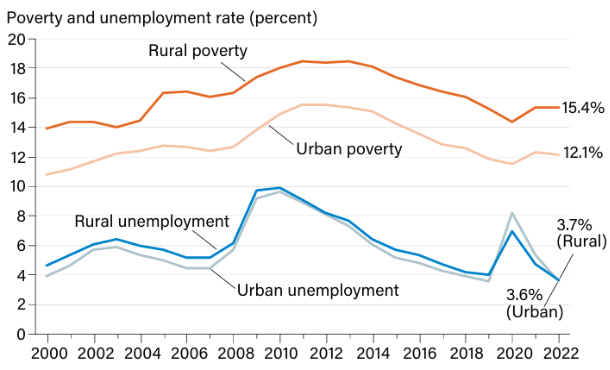
According to data from the Centers for Disease Control and Prevention (CDC), individuals working in agriculture, forestry, and fishing occupations have one of the highest suicide rates of any occupational group in the United States — 49.9 per 100,000 among farmers, compared to 32.0 per 100,000 among all occupations.²²⁰
This reality manifests itself in the cases being handled by mental health professionals across the South. In location-based data seen in Figure 21, the ten Georgia counties with the highest crisis episode prevalence of contact with the state’s 988 suicide and crisis lifeline were all in the agriculture-heavy South Georgia counties.
FIGURE 21. Crisis Episode Prevalence by Georgia County, Number of Episodes per 10,000 Residents
(September 2024-August 2025)

To address these gaps, the federal government and many state governments across the South have taken steps to destigmatize mental health concerns, build professional support networks, and provide resources to encourage wellness among farmers. The Farm and Ranch Stress Assistance Network (FRSAN), authorized under the federal government’s 2018 and 2023 Farm Bills, provided grants to universities and nonprofit partners to support helplines, peer support, and suicide prevention training for agricultural communities.²²¹
States across the South have instituted a number of programs and campaigns to encourage farmers to seek support and ensure their own mental health and wellbeing. Examples include:
- Alabama: “A Healthy You, A Healthy Farm” campaign from the Alabama Department of Agriculture and Industries;
- Georgia: “Growing Stronger Together” support network, led by the Georgia Foundation for Agriculture, and “Rural Georgia: Growing Stronger” initiative led by Georgia Department of Behavioral Health and Developmental Disabilities and UGA Cooperative Extension Service;
- Kentucky: “Building Bridges to Farmer Mental Health” project, launched by the University of Kentucky; and
- Oklahoma: “Cultivating Healthy Minds” initiative, offered by the Oklahoma Farm Bureau.
As farmers continue to struggle and America’s agriculture industry continues to evolve, state policymakers are in a position to provide needed support for farmers by encouraging regional coordination among key industry, non-profit, and healthcare partners; increasing access to mental health resources and support centers, including tools like 988 and telehealth response to address physical access challenges in remote rural areas; and continuing to invest in public service campaigns that destigmatize mental health challenges and the reliance on peers and support networks in the farming community.
- “Modern Farmer: Farmers Face a Mental Health Crisis. Talking to Other in the Industry Can Help.” American Farm Bureau Federation, June 4, 2024.
- United States Department of Agriculture, 2022 Census of Agriculture
- Jared White, ”NFU Urges Action As Family Farmers Face Mounting Economic Pressure.” Brownfield, October 16, 2025.
- Faith Parum, ”Declining Farm Economy Continues to Pressure Profitability.” American Farm Bureau Federation, October 6, 2025.
- ”Farm Financial Stress and Suicide Risk: Red Flags Every Community Should Know.” Southern Ag Today, October 3, 2025.
- Aaron Sussell et. al., “Suicide Rates by Industry and Occupation – National Vital Statistics System, United States, 2021.” Centers for Disease Control and Prevention, December 15, 2023.
- “Farm and Ranch Stress Assistance Network (FRSAN).” United States Department of Agriculture, National Institute of Food and Agriculture, n.d.
Supporting Working Families: Employer Childcare Tax Credit Initiatives
Recently, particularly in the years following the COVID-19 pandemic, states have been seeking ways to enhance childcare affordability within their states. The federal government offers a tax credit to employers who provide or subsidize childcare; this credit is up to 25 percent of qualifying onsite childcare facility and referral costs (capped at $150,000/year).²²² This tax credit has helped reduce the cost of childcare for parents, ultimately reducing the number of parents leaving the workforce due to a lack of affordable childcare.²²³
Building on this model, several states have implemented employer childcare tax policies to incentivize employers to help shoulder the burden of childcare costs, making childcare more affordable for working parents. Employer childcare tax credits are designed to reduce the cost of childcare for parents, which supports their ability to secure reliable care and remain in the workforce. The tax credits inadvertently help companies reduce chronic absenteeism, which ultimately reduces long-term costs. In fact, one survey found that employees who did not have to miss work due to childcare disruptions reported avoiding up to 13 work absences.²²⁴ Additionally, a study found that 70 percent of employees are more likely to choose an employer offering childcare benefits over one that does not.²²⁵ This highlights how employer childcare tax credits might positively impact employee recruitment and retention. By encouraging more businesses to provide childcare, states are effectively bolstering the workforce.
Tax credits for employers offering childcare benefits can also positively impact the working parents who do not directly receive these benefits. The childcare economy is a massive industry. In 2022, the childcare industry contributed a total of $152.2 billion to the economy.²²⁶ Employer childcare tax credits help maintain the childcare market by subsidizing the cost for some parents, stabilizing the demand. In doing so, the price of childcare should theoretically stabilize as well, meaning the cost will not increase for employees who are not offered childcare benefits.
Although employer childcare tax credits offer certain advantages, available data indicates these credits are often not fully utilized. For instance, the Government Accountability Office (GAO) reported that in 2016, only a few hundred of the nearly 70,000 corporate income tax filings claimed the childcare credit.²²⁷
TABLE 15. Employer Childcare Tax Credit Caps and Refundability in CSG South states
| State | Employer Cost Cap (i.e., stipends) | Capital Expenditure / Facility Cost Cap | Aggregate Total / State Cap | Tax Credit Refundable |
|---|---|---|---|---|
| Alabama²²⁸ | $600,000 per year | $25,000 per year | $15 million/year | Yes |
| Arkansas²²⁹ | 3.9% of the annual salary of employees employed exclusively for childcare OR $5,000 tax credit for the first year of business | $150,000 per year | N/A | Yes |
| Florida²³⁰ | Between $50,000 and $1 million per year, depending on the number of enrolled eligible children | 50% of start-up costs (first year) | Between $250,000 and $1 million per year, depending on the number of employees | No |
| Georgia²³¹ | 50% of the employer’s Georgia income tax liability | N/A | $20 million/year | No |
| Louisiana²³² | $50,000 per year | $50,000 per year | N/A | Yes |
| Mississippi²³³ | 50% income tax credit | N/A | N/A | No |
| South Carolina²³⁴ | $3,000 per qualifying employee | $100,000 capital expenditures | N/A | No |
| Virginia²³⁵ | 50% of the cost of operations | 50% of the total property costs | Cannot exceed 100% of the tax liability | No |
| West Virginia²³⁶ | 50% of the cost of operations | 50% of the total property costs | Cannot exceed 100% of the tax liability | No |
- “Employer-Provided Childcare Credit | Internal Revenue Service.” n.d. Www.irs.gov.
- “The Effects of the Child and Dependent Care Tax Credit on Childcare Affordability | Bipartisan Policy Center.” 2021. Bipartisanpolicy.org. 2021.
- Kos, Emily, Kelsey Clark, Nicole De Santis, and Tyler Joseph. 2024. Review of Childcare Benefits More than Pay for Themselves at US Companies. Boston Consulting Group.
- O’Connor, Annie. 2024. “Employee Benefit Trends: Why Employers Are Prioritizing Care Benefits to Improve Retention and Productivity.” Care for Business. March 25, 2024.
- ”Child Care Sector Packs a Big Economic Punch: Contributes 152 Billion.” The Conference Board, December 10, 2024.
- Could a Bigger Tax Credit Boost Employer-Provided Childcare?” 2024. Tax Policy Center. August 8, 2024.
- Stephenson, Jemma. 2024. “Alabama House Committee Passes Childcare Tax Credit Bill • Alabama Reflector.” Alabama Reflector. April 16, 2024.
- “Business Incentives and Credits – Arkansas Department of Finance and Administration.” 2024. Arkansas Department of Finance and Administration. November 8, 2024.
- State Tax Credits for Childcare.” 2021. Ced.org. 2021.
- “Wolters Kluwer.” 2025. Vitallaw.com. 2025.
- “School Readiness Credit, Louisiana Department of Revenue.” 2018. Louisiana.gov. 2018.
- “State Tax Credits for Childcare.” 2021. Ced.org. 2021.
- “South Carolina Department of Social Services.” 2023. Sc.gov. 2023.
- “State Tax Credits for Childcare.” 2021. Ced.org. 2021.
- “State Tax Credits for Childcare.” 2021. Ced.org. 2021.
Impactful Justice: Revisiting Approaches to Sentencing Reform
The South is home to seven of the ten highest incarceration rates in the nation²³⁷ (see Table 16 for CSG South state incarceration rates compared to the national incarceration rate). As such, the South serves as a microcosm of the national discussion surrounding ways to reduce incarceration through criminal justice policy reform.
TABLE 16. Incarceration Rate by State (2024)
| State | Incarceration Rate per 100,000 People |
|---|---|
| Alabama | 390 |
| Arkansas | 574 |
| Florida | 377 |
| Georgia | 435 |
| Kentucky | 437 |
| Louisiana | 596 |
| Mississippi | 661 |
| Missouri | 381 |
| North Carolina | 268 |
| Oklahoma | 563 |
| South Carolina | 302 |
| Tennessee | 334 |
| Texas | 452 |
| Virginia | 312 |
| West Virginia | 331 |
| National | 355 |
Recent legislative efforts suggest that policymakers are adopting a mixed-methods approach to addressing this topic. Some Southern states are cautiously moving toward models that allow for sentence reduction eligibility, particularly for survivors of abuse, while others are adopting a “tough-on-crime” approach that increases penalties in an effort to deter criminal behaviors and ease public concerns. Table 17 outlines enacted legislation over the past two years.
TABLE 17. Recent Sentence Reduction Legislation in CSG South States
| State | Bill Number | Summary |
|---|---|---|
| Georgia | House Bill 582 (2025) | The Georgia Survivor Justice Act allows defendants to use evidence of violence or abuse in their defense, revises coercion defenses, introduces privileges for victim-centered dialogues, mandates uniform peace officer oaths, and provides for sentence modifications based on new evidence of violence or abuse. |
| Oklahoma | Senate Bill 1835 (2024) | The Oklahoma Survivors’ Act provides mechanisms for reduced sentencing and resentencing for survivors of domestic violence, contingent on presenting clear evidence of abuse and its impact on their criminal behavior, while also allowing district attorneys to vacate wrongful convictions. |
| Virginia | Senate Bill 936 (2025) | This bill amended Virginia’s probation laws to allow for reduced probation periods without a hearing if warranted by the defendant’s conduct based on educational and employment achievements. |
| Kentucky | House Bill 5 (2024) | This legislation overhauled Kentucky’s criminal statutes by increasing penalties for violent and drug-related offenses, introducing new crimes, regulating bail organizations, addressing homelessness, revising parole procedures, mandating school reporting of threats, enhancing protections for first responders, and establishing juvenile restorative justice programs. |
| Louisiana | House Bill 5 (2025) | This legislation significantly increases penalties for prostitution-related offenses involving minors, expands definitions and protections for trafficking victims, and strengthens sex offender registration and victim support provisions in Louisiana law. |
| North Carolina | House Bill 307 (2025) Senate Bill 311 (2025) | This bill introduces a new aggravating factor for crimes committed against victims who use public transportation, affecting both general and capital felony sentencing. It also modifies death penalty procedures by establishing strict timelines for postconviction motions and Supreme Court review. Known as “The Law and Order Act,” this legislation is a comprehensive reform to North Carolina’s criminal justice system, increasing penalties for violent crimes, criminalizing activities like gift card theft, and reinforcing gun safety laws. |
| Tennessee | Senate Bill 2044 (2024) | The legislation limits the impact of sentence reduction credits on parole eligibility and sentence expiration dates, and it mandates that inmates must serve at least 55 percent of their sentence before becoming eligible for parole. |
| Texas | House Bill 2306 (2025) | This legislation restricts parole eligibility for inmates convicted of certain human trafficking offenses involving children and disabled individuals. |
| West Virginia | Senate Bill 196 (2025) | This bill increases penalties for drug offenses in West Virginia, aligning them with federal standards, by imposing harsher sentences, higher fines, and making certain offenses ineligible for probation or suspension, while also providing a pathway for charge reduction through drug treatment programs. |
- The Sentencing Project. 2023. “U.S. Criminal Justice Data.” The Sentencing Project. 2023.
Honoring Service: Expanding Mental Health Support for Veterans
Throughout the years, states have made a concerted effort to support veterans, especially when it comes to mental health. However, the status of veteran mental health continues to be disheartening. The U.S. Department of Veterans Affairs (VA) reports that 1 in 3 veterans exhibit signs of depression²³⁸ and that there are 17.6 veteran suicides per day²³⁹. Given the high number of veterans in the region (about 86,000)²⁴⁰ as well as the South’s shared cultural duty to serve our veterans, many Southern states have taken the initiative to partner with VA and local community organizations to address the unique challenges Southern veterans may face when attempting to access mental health support. These state-level efforts are crucial for bridging service gaps and connecting veterans with culturally competent care.
One approach that states have utilized is making their programs more veteran-friendly, easy to navigate, and holistic. For example, the Georgia Department of Veterans Service includes a Suicide Prevention and Outreach Coordinator who links veterans to resources and conducts training across the state²⁴¹. Similarly, this past session, Texas House Bill 114 revamped its Veteran Suicide Prevention Action Plan program requirements to include peer-to-peer counseling, in an effort to make veterans feel more comfortable addressing mental health concerns. Furthermore, the South Carolina Department of Veterans Affairs has leveraged nonprofit and private sector partnerships to develop a veteran suicide prevention program with the Substance Abuse and Mental Health Services Administration (SAMHSA)²⁴² and the Emory Healthcare Veterans Program (EHVP)²⁴³. By aggregating the resources of different organizations, state agencies are creating a more far-reaching network of support for veterans.
In addition to tangible programming efforts, states are making an effort to understand the unique experience veterans have when dealing with mental health, and policymakers are implementing proactive policies that address contributing factors. For instance, a study found that veteran suicide rates peaked six to twelve months after separating from the military²⁴⁴. With this knowledge, states have begun implementing policies aimed at reducing the stressors associated with transitioning from active-duty service to veteran status. Florida offers employment resources for veterans through Veterans Florida and the Veterans Employment and Training Services Program (see Florida House Bill 1329 (2024) for the most recent updates to these programs). The resources provided include grants for licensure, entrepreneurial and business connections, and workforce preparedness training²⁴⁵. Florida is just one example of how states are looking to address the root causes of veteran mental health challenges, but it is representative of a broader movement across the CSG South region.
- “Depression.” 2019. Va.gov. 2019.
- Miller, Matthew. 2024. “VA Releases 2024 National Veteran Suicide Prevention Annual Report.” VA News. December 19, 2024.
- “Veterans by State 2021.” n.d. Worldpopulationreview.com.
- “Suicide Prevention and Outreach.” 2024. Georgia Department of Veterans Service. 2024.
- Missing Link
- “Post 9/11 Veterans in South Carolina Eligible for Mental Health Resources in Emory Healthcare Veterans Program | SC Department of Veterans’ Affairs.” 2023. Sc.gov. March 7, 2023.
- Ravindran, Chandru, Sybil W. Morley, Brady M. Stephens, Ian H. Stanley, and Mark A. Reger. 2020. “Association of Suicide Risk with Transition to Civilian Life among US Military Service Members.” JAMA Network Open 3 (9): e2016261.
- Marino, Joe. 2025. “Veterans Florida – Florida Is First for Veterans.” Veterans Florida. 2025.
FEATURE SPOTLIGHT
Our Two Cents: Implications of the Penny Production Stoppage
On Wednesday, November 12, 2025, the final pennies were produced. Even with the shift of production from 100 percent copper at their inception in 1793 to just 2.5 percent copper (and the rest made of the cheaper zinc), it was still estimated that each penny cost nearly four cents to produce²⁴⁶,²⁴⁷. While the spending implications on the U.S. Mint and the federal government are clear — a 2025 study from the Federal Reserve Bank of Richmond estimated $85.3 million in production costs for the penny in the previous year — state and local governments are likely to experience different and unique challenges stemming from the changing dynamic of the penny²⁴⁸.
While no new pennies will enter circulation, the coin remains valid U.S. currency and the average lifespan of a coin is 30 years²⁴⁹. This means that the penny won’t disappear completely for many decades, but its presence will wane in the coming years. As the number of pennies in circulation begins to decline, retailers will be forced to make decisions about what they charge for goods and services, and state and local government officials will have to address challenges with the administration of percentage-based sales and use taxes.
That does not mean that state governments are unaffected. Four key policy considerations for state policymakers are establishing rounding standards, the assessment of sales and use taxes that have historically been based on one-cent increments, the infrastructure to administer sales and use tax collections, and consumer protections in parity of transaction types.
To date, the federal government has not provided any formal guidance to retailers on rounding practices that will become more commonplace as pennies continue to fall out of circulation²⁵⁰. This is concerning for retailers having to make decisions at their point of sale, and is increasingly on the minds of state policymakers who are recognizing the need for state-level action in the absence of federal guidance.
FIGURE 22. Percentage of Cash Payments Ending in Zero (Red) or Five (Orange) Cents

At the point-of-sale, the gradual reduction of pennies in circulation means that retailers will have to begin making deferrals to five-cent increments — the nickel now being the smallest unit of currency in active production and entering circulation — for the cost of their goods and services. The most common approach being presented by retailers is that prices ending in 1, 2, 6, or 7 would be rounded down to the closest five-cent increment, while prices ending in 3, 4, 8, or 9 would be rounded up. This is widely being referred to as a “rounding tax,” even though the price differential (both positive and negative) is being borne by the retailer rather than the government²⁵¹.
Another rounding question for state governments to address is whether that rounding takes place for all transactions or is limited to cash transactions that are fundamentally reliant on the penny. While data are limited, a 2024 study from the Federal Reserve Bank of Atlanta suggests that the impact of this “rounding tax” may be limited. Low-cost items, which would be disproportionately affected by rounding and the subsequent sales and use tax implications on states, are largely priced on these five-cent increments already — 76 percent of payments under $5.00 are already at these intervals²⁵².
At the state level, each of the 15 CSG South states collects a state sales/use tax, ranging from 4.0 percent to 7.0 percent²⁵³. In addition, local governments have varying capacities to collect above and beyond those baseline state rates, though authority and rates are highly varied.
Even with the “rounding tax” adjusting the pre-tax cost of the product or service, the addition of sales/use tax rates further complicates the matter. While rounding already occurs in sales and use tax collections, it is currently done to the one-cent increment. Adjusting to five-cent increments has the potential for significant implications.
Table 18 provides several examples of the potential implications. First is an electronic device that currently retails for $199.58. As a result of the “rounding tax,” the retail price would increase to $199.60. While the retail cost would increase by two cents as a result of the rounding, the sales tax revenue generated by the state (at a 7.0 percent rate) would actually decrease by the same amount as a result.
These disparities are going to be even more pronounced in retailers that deal with high volumes of low-dollar transactions. For example, a $0.98 candy bar would have the retail cost rounded up to an even $1.00. The same 7.0 percent sales tax would subsequently be rounded down to $0.05 — the same two-cent loss of would-be tax revenue to the state.
In both of these transactions, the state experiences a two-cent reduction in would-be sales and use tax revenue. Multiplied across the millions of transactions taking place across states, the implications have potential to be significant.
On the other side of the coin, the rounding of a high-dollar computer yields no difference in the sales tax revenue generated for the state coffers.
While these figures focus exclusively on the potential impact on state government revenue, state policymakers must also consider the potential implications on local governments in their states, which also rely heavily on percentage-based sales and use taxes.
Tax Collection Infrastructure
Because sales and use tax is so ubiquitous across the hundreds of thousands of businesses across the South, states have developed sophisticated and dynamic infrastructure to ensure efficient, effective, and accurate remittances of this critical revenue stream. These systems include platforms like the Georgia Tax Center, the Kentucky Taxpayer Portal, and the Virginia Tax Online Services for Businesses, among others across the region.
State Departments of Revenue, Treasurers Offices, and their equivalents managing these complex systems will need appropriate lead time to prepare, test, and deploy potentially significant changes to their systems. While the immediate impacts are limited and the full effect of the cessation of penny production will be gradual, states are well-positioned to anticipate potential challenges and invest in updates that will ease tax remission processes for business owners before the challenges begin to emerge in the coming years.
Consumer Protection Policies
Beyond the tax revenue and collection mechanisms, state governments must consider other potential policy challenges. A 2024 study by The Federal Reserve Financial Services found that only 14 percent of all payments in the United States were done with cash, down from 31 percent of transactions eight years earlier in 2016. The remaining 86 percent of transactions were done through credit cards, debit cards, checks, and other digital payment platforms. Because none of these methods are affected by the physical penny, charges (and their resulting payment) could continue at one-cent increments. From a policy perspective, states must consider what protections are appropriate and necessary to ensure parity for consumers across transaction types.
The disparity between cash transactions and credit card transactions, in particular, is not new for states. Businesses are widely permitted to collect a percentage-based surcharge for the use of credit cards, allowing the business to recover the costs associated with being a user of the credit card network. The premise of the surcharge differs from the coming rounding changes as a result of the penny, but the standard exists for state-level policy-making to ensure fair and limited disparities between different types of transactions.
In addition to parity, states are in a position to establish standards on other forthcoming challenges presented by the reduction of pennies in circulation, including laws regarding transparency of rounding practices, pre-emptive coordination with related programs (including SNAP in states where groceries are considered taxable), and consumer protection against potential predatory pricing practices by retailers.
Many Southern states had already adjourned by the May 2025 announcement of the cessation of penny production by the U.S. Treasury, meaning policymakers in state capitols will be taking up many of these questions for the first time in the 2026 legislative session. In the meantime, the last penny has been produced and the implications will begin soon – it is incumbent on states to respond and prepare now. Standards for rounding norms, revenue implications for sales and use tax collections, and consumer protections should be at the forefront of these discussions, as Americans begin to adjust to a post-penny world.
TABLE 18. Examples of “Rounding Tax” Impact
| Current Cost (Rounded) Penny-based | “Rounding Tax” Cost (Rounded) Nickel-based Cost | |
|---|---|---|
| Retail Cost (Electronic Device) | $199.58 | $199.60 |
| State Sales Tax (7.0 percent) | $13.97 | $13.95 |
| Retail Cost (Candy Bar) | $0.98 | $1.00 |
| State Sales Tax (7.0 percent) | $0.07 | $0.05 |
| Retail Cost (Computer) | $2,309.97 | $2,309.95 |
| State Sales Tax (7.0 percent) | $161.70 | $161.70 |
- L. Carol Ritchie, “Farewell, fair penny. You are finished, but never forgotten.” NPR, November 18, 2025.
- Maryclaire Dale, “US Mint presses final pennies as production ends after more than 230 years.” Associated Press, November 18, 2025.
- Zhu Wang and Russell Wong, “Rounding Up: The Impact of Phasing Out the Penny.” Federal Reserve Bank of Richmond, July 2025.
- Stephanie Meredith, “How Coins Are Made: Bringing Coins Into Circulation.” United States Mint, September 21, 2020.
- Austen Jensen, “Retailers Face Penny Shortages, Call for Federal Action.” Retail Industry Leaders Association, November 12, 2025.
- Kelly Tyko, “Why the end of pennies could trigger a small “rounding tax””. Axios, July 9, 2025.
- “Rounding Rules and Cash Inflation When We No Longer Make Cents.” Federal Reserve Bank of Atlanta, November 3, 2025.
- Jared Walczak, “State and Local Sales Tax Rates, Midyear 2025.” Tax Foundation , July 8, 2025.
- Berhan Bayeh, Isaiah Nardone, Shaun O’Brien, and Hailey Phelps, “2025 Findings from the Diary of Consumer Payment Choice.” The Federal Reserve Financial Services, June 3, 2025.
- “Credit Card Surcharge Guidance: A State-by-State Overview of Surcharging Laws.” Stax Payments.
- Ryan Patrick Jones, “US Treasury unveils plan to end production of penny coin.” Reuters, May 22, 2025.
ABOUT CSG SOUTH
Established in 1947, the Council of State Governments Southern Office (CSG South) is a nonprofit, nonpartisan organization that exists to support members in all three branches of state government. At CSG South, we act as an extension of state government, fostering the exchange of insights and ideas to help state officials and government staff shape public policy and create problem-solving partnerships.
The mission of CSG South is to promote and strengthen intergovernmental cooperation among its 15 member states: Alabama, Arkansas, Florida, Georgia, Kentucky, Louisiana, Mississippi, Missouri, North Carolina, Oklahoma, South Carolina, Tennessee, Texas, Virginia, and West Virginia. Predominantly, this is achieved through the ongoing work of CSG South’s seven standing committees and supporting groups.
Leadership, members, and staff depend on CSG South to identify and analyze solutions for the most prevalent and unique policy issues facing Southern state governments. We facilitate outreach in state capitols, leadership development, staff exchange programs, domestic and international policy delegations, and other efforts to support state policymakers and staff in their work to build stronger, more successful states.
CSG South hosts the Southern Legislative Conference (SLC), the largest regional gathering of legislative members and government staff. SLC boasts an array of well-established programs—focusing on both existing and emerging state government innovations and solutions—providing policymakers and government staff diverse opportunities to interact with experts and share their knowledge with colleagues.
The Council of State Governments Southern Office
1946 Clairmont Road
Decatur, Georgia 30033
Website: csgsouth.org
Phone: 404.633.1866
Email: csgsouth@csg.org
Social: @CSGSouth | CSGSouth
ALABAMA • ARKANSAS • FLORIDA • GEORGIA • KENTUCKY • LOUISIANA • MISSISSIPPI • MISSOURI
NORTH CAROLINA • OKLAHOMA • SOUTH CAROLINA • TENNESSEE • TEXAS • VIRGINIA • WEST VIRGINIA